


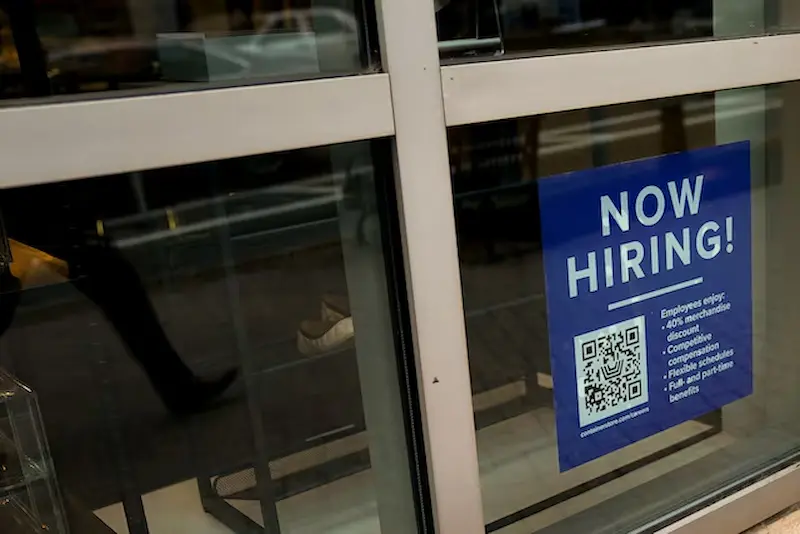


In March, the U.S. services sector experienced a notable slowdown, reaching a nine-month low. This decline aligns with expectations that the overall economic growth likely stagnated in the first quarter due to uncertainties stemming from import tariffs.
President Trump's recent announcement of a 10% minimum tariff on most imported goods into the U.S. has further clouded the economic outlook. The move has triggered retaliatory threats and led to fluctuations in global financial markets. Fitch Ratings has highlighted that the nation's current tariff rate is the highest it has been in more than a century. This escalating trade tension raises concerns about inflation, potential job losses, and the risk of pushing the economy into recession.
The Institute for Supply Management (ISM) reported that the nonmanufacturing Purchasing Managers Index (PMI) fell to 50.8 in March, the lowest reading since June 2024, down from 53.5 in February. This indicates a deceleration in the services sector, which constitutes a significant portion of the economy.
The impact of tariffs has already started to be felt across various industries, with businesses highlighting cost increases due to tariff activity. Sectors such as information, educational services, healthcare, and social assistance have reported contractions. Construction businesses are already passing on the effects of import duties to customers, setting a precedent for potential price hikes.
Economists have expressed concerns that the ongoing tariff escalations could prompt a recession, especially if other countries retaliate with duties of their own. The GDP estimates for the first quarter are bleak, with a potential contraction looming. Data from the Commerce Department's Bureau of Economic Analysis also reflected concerns, showing a high level of imports in February, which could exacerbate the trade deficit and impact GDP negatively.
Stocks on Wall Street have responded to the uncertainty by plunging, the dollar has weakened, and U.S. Treasury yields have fallen. The situation is further complicated by tepid new orders, potential labor market weakness, and the risk of prolonged unemployment amid federal worker layoffs.
Overall, the current economic landscape is fraught with challenges, as businesses navigate the complexities of tariffs, cost pressures, and uncertain demand. The path ahead remains uncertain, with cautious optimism balanced against the backdrop of potential economic downturns.