


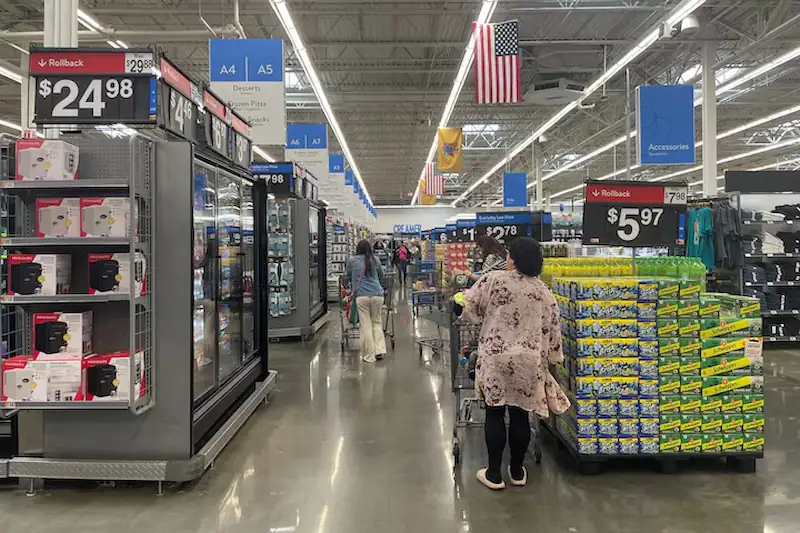


In an unexpected turn of events, U.S. consumer prices experienced a decline in March, a stark contrast to the inflationary pressures that were anticipated due to President Donald Trump's aggressive tariff policies. The decrease in prices, the first in almost five years, was attributed to the drop in gasoline and used motor vehicle costs. This deflationary trend, however, is unlikely to be sustained as the trade war with China intensifies, leading to fears of a global economic slowdown.
The Labor Department's report on the consumer price index (CPI) for March revealed a 0.1% decrease, marking a significant shift from the 0.2% increase seen in February. Economists had predicted a marginal 0.1% uptick in CPI for March, indicating the surprising nature of the decline. Factors such as lower gasoline prices, stagnant travel demand, and weakening business sentiment contributed to the unexpected fall in prices.
While some may interpret the decline in CPI as a positive sign, economists caution against celebrating prematurely. The ongoing trade tensions, with escalating tariffs on Chinese goods and other imports, are expected to drive up prices in the coming months. Trump's recent tariff increases have heightened the potential for a recession, prompting speculation that the Federal Reserve may need to cut interest rates further to mitigate the economic impact.
Despite the temporary relief from lower consumer prices, the overarching uncertainty surrounding trade policies and their repercussions on the economy remain a cause for concern. As the trade war continues to unfold, the possibility of higher inflation looms large, casting a shadow over consumers and businesses alike. The rollercoaster of tariff announcements and market reactions underscores the delicate balance between economic growth and price stability in a volatile global landscape.
As the U.S. navigates through the choppy waters of trade disputes and tariff escalations, the resilience of the economy will be tested. The implications of the tariff-driven inflation surge, coupled with weakening demand and strained consumer confidence, paint a complex picture of the economic outlook. Amidst the uncertainty, all eyes are on the Federal Reserve's policy decisions and their potential impact on the trajectory of inflation and economic growth in the months ahead.