


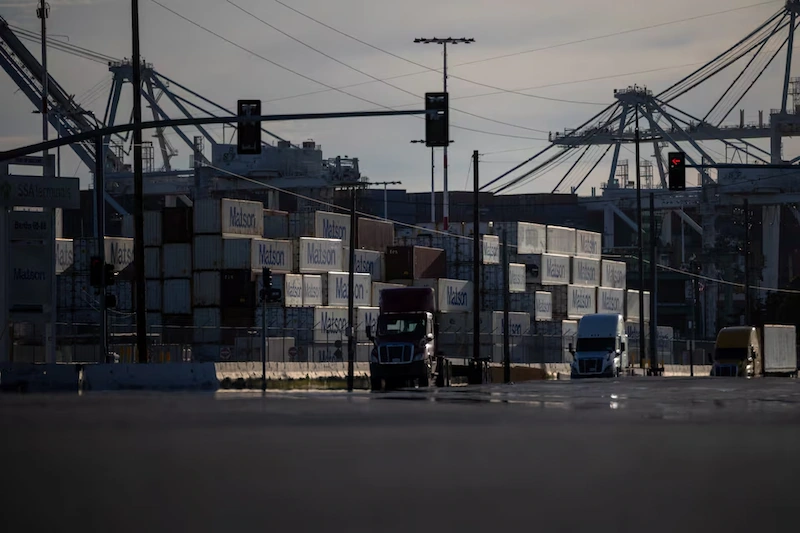


Global markets were rocked by heightened tensions in the ongoing trade war between the United States and China, as Beijing retaliated with a significant increase in tariffs on U.S. imports. President Donald Trump's decision to raise duties on Chinese goods has set off a tit-for-tat escalation, raising concerns about the impact on the global economy.
Investors and economists are on edge as the trade dispute threatens to disrupt supply chains and drive up inflation. With fears of a looming recession growing, the uncertainty in the markets has reached levels not seen since the early 1980s.
As the U.S. and China exchange blows with escalating tariffs, the value of goods traded between the two economic giants hangs in the balance. The White House has reaffirmed its commitment to a tough stance on trade, while China has condemned the U.S. actions as "unilateral bullying and coercion."
The repercussions of the trade war are being felt across the financial world, with the dollar weakening and gold prices hitting record highs as investors seek safe havens. The bond market, a traditional haven of stability, has also seen significant upheaval, with yields on U.S. Treasury notes rising sharply.
In response to the mounting economic pressures, countries around the world are exploring new trade partnerships and negotiations. While the U.S. touts a pause in tariffs with some nations, China's focus on strengthening ties with the European Union signals a shifting global landscape.
As businesses brace for higher costs and disrupted trade flows, the path forward remains uncertain. With both sides showing a willingness to stand firm in the face of escalating tensions, the future of global trade hangs in the balance, leaving markets and economies on edge.