


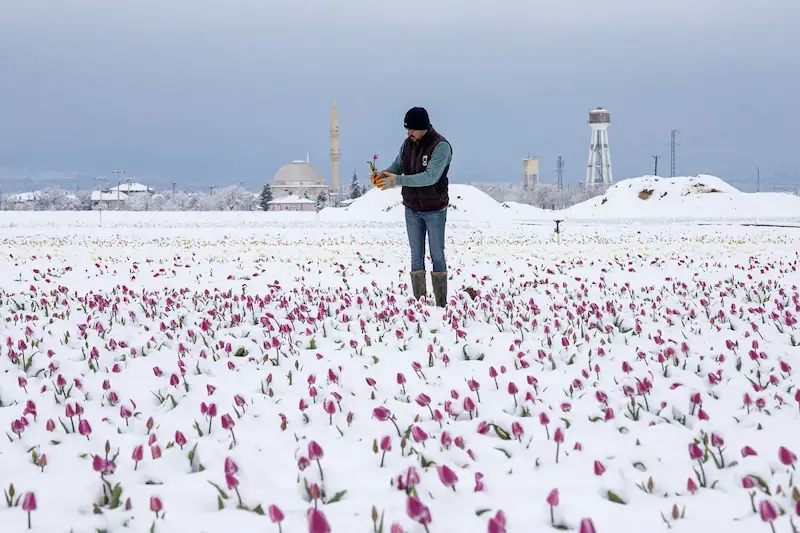


Turkey recently faced a harsh agricultural cold snap in April, described as one of the most severe in over a decade by Agriculture Minister Ibrahim Yumakli. The plummeting temperatures, dropping below -15 degrees Celsius in some regions, brought significant damage to crops across the country, including frost, snow, and hail. Yumakli emphasized that the worst impact occurred between April 10-12, raising concerns about potential strains on food supply chains, possible price increases in the upcoming months, and the enduring high levels of inflation in Turkey, where food prices play a crucial role.
Despite a gradual slowdown in inflation over the past year, with the rate at 38.1% most recently, the central bank aims to achieve a 24% target by the end of the year. Central to their inflation-reduction efforts is maintaining a stable lira, which took a significant hit in mid-March amid broader market uncertainties following the detainment of Istanbul Mayor Ekrem Imamoglu. Despite this setback, the currency has since stabilized, partly due to interventions by the central bank.
In response to the agricultural damage caused by the cold snap, government teams are currently conducting on-ground assessments. Farmers affected by the adverse weather conditions are being urged to report their losses to local agricultural offices and insurers. Minister Yumakli assured that Turkey will continue to provide support to producers to ensure ongoing production and minimize the impact of the damage. While efforts are underway to assess the full extent of the destruction, it remains an ongoing process to mitigate the effects of the severe cold snap on Turkey's agricultural sector.