


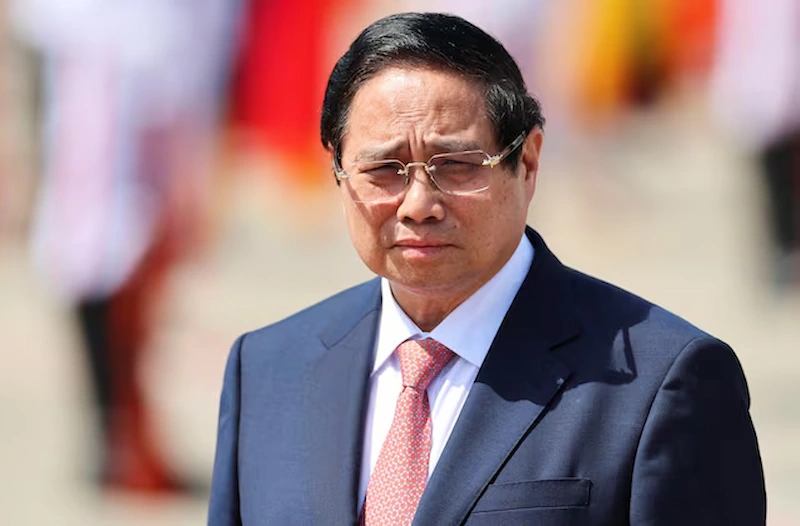


In response to looming U.S. tariffs that could potentially disrupt its export-driven economy, Vietnam is intensifying its efforts to expedite negotiations for new free trade agreements. Prime Minister Pham Minh Chinh has issued a directive calling on the trade ministry to swiftly conclude or initiate talks with key markets such as India, Brazil, Pakistan, Egypt, as well as regions in the Middle East, Africa, Latin America, Central Asia, and Eastern Europe.
Facing the specter of 46% "reciprocal" tariffs from the Trump administration, currently on hold until July, Vietnam is determined to safeguard its growth model heavily reliant on exports to the United States, its primary market, and substantial investments from foreign manufacturers. The country has recently intensified its crackdown on trade fraud, counterfeiting, and other issues of concern to Washington as preparations for tariff negotiations with the U.S. are underway.
Vietnam boasts a network of 17 bilateral or multilateral free trade agreements, including the Comprehensive and Progressive Agreement for Trans-Pacific Partnership and the Regional Comprehensive Economic Partnership Agreement, along with agreements with the European Union, Japan, and South Korea. Notably absent from this list is a trade deal with the U.S.
In his directive, Prime Minister Chinh reaffirmed Vietnam's commitment to achieving a GDP growth target of at least 8% for the year despite the impending tariffs. The directive acknowledges the complex and unpredictable global economic landscape, characterized by heightened strategic competition among major nations, escalating trade tensions, and dimming economic prospects around the world.
To mitigate the impact of tariffs, Chinh outlined a series of measures aimed at sustaining economic growth, including ensuring adequate funding for growth, enhancing lending to young homebuyers, and providing soft loans to businesses most affected by the tariffs. Additionally, efforts will be made to boost infrastructure development, stimulate domestic consumption, and invest in digital transformation and technologies.
The directive also emphasizes the promotion of e-commerce platforms to support the consumption of domestically produced goods, especially in remote areas. Through these measures, Vietnam aims to fortify its economic resilience and navigate the challenges posed by the evolving global economic landscape.