


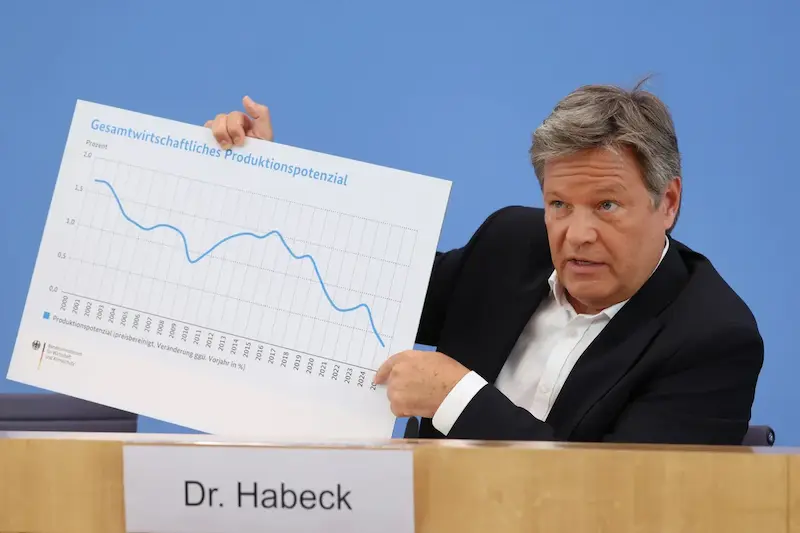


Germany's economic outlook has taken a bleak turn as revised government forecasts suggest that the country is likely to encounter a lack of growth this year. Friedrich Merz, the conservative Chancellor-in-waiting, is set to take office amidst this challenging economic backdrop. Outgoing Economy Minister Robert Habeck highlighted that Gross domestic product is expected to remain stagnant, a significant departure from earlier projections of modest growth.
The underlying causes of Germany's economic woes have been attributed to various factors, including uncertainty stemming from US President Donald Trump's trade policies, weakening demand for German exports, and a diminishing competitive edge in the global market. Habeck emphasized the need for a negotiated resolution to the transatlantic trade disputes to mitigate the adverse effects on the German economy.
Merz, who secured a coalition deal with the center-left Social Democrats, made revitalizing the economy a central promise in his election campaign. However, the anticipated economic stimulus from planned investments is not expected to materialize until next year, giving rise to concerns about the possibility of a third consecutive year of shrinking GDP.
The incoming Chancellor will face the daunting task of steering the economy out of its slump against the backdrop of global geopolitical uncertainties. Trump's tariffs pose an additional threat to Germany's economic prospects, as underscored by Bundesbank President Joachim Nagel and outgoing Finance Minister Joerg Kukies.
As business sentiment continues to deteriorate amidst trade war tensions, Merz remains steadfast in his vision of a brighter future for Germany. He has endorsed the coalition agreement as a blueprint for economic revival, emphasizing the government's commitment to fostering economic strength, security, fairness, and modernization.
Amidst the somber economic outlook, Merz seeks to instill confidence and optimism, asserting that Germany's resilience lies in its ability to adapt, innovate, and take decisive action in the face of challenges. The path ahead may be fraught with obstacles, but the new Chancellor remains determined to lead Germany towards a future characterized by progress and prosperity.