


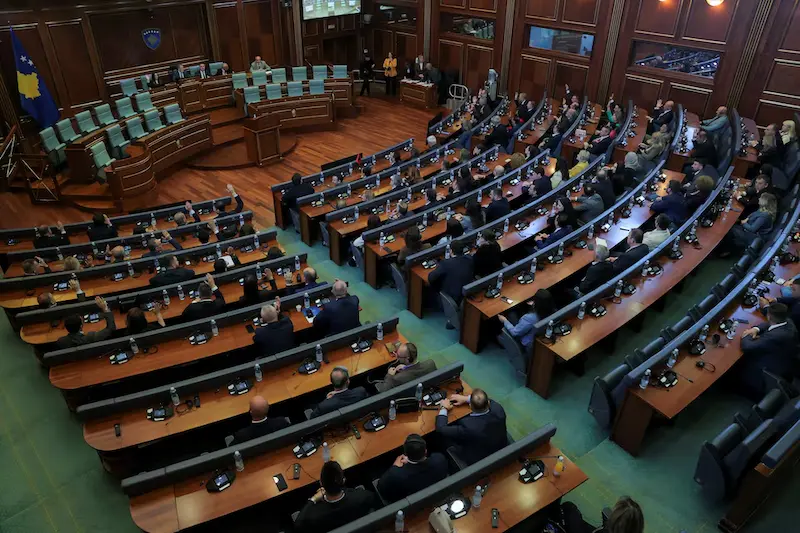


Kosovo's political crisis continues as its parliament struggles to elect a speaker, prolonging the deadlock that has thwarted efforts to form a new government following an inconclusive election over two months ago. The failure to appoint a speaker has exacerbated deep-rooted divisions in Europe's youngest state, highlighting the challenges faced in the country's political landscape.
In the aftermath of the contentious February 9 election, where outgoing Prime Minister Albin Kurti's Vetevendosje party emerged as the largest but fell short of a majority, the formation of a government has been marred by a lack of cross-party support. Opposing factions have refused to collaborate with Vetevendosje, citing Kurti's role in exacerbating tensions in Kosovo's Serb-majority regions, a point of contention that has strained the country's prospects of EU integration and triggered sanctions from the bloc.
The impasse in parliament has raised the specter of a snap election later in the year if a coalition government cannot be established. Despite repeated attempts to elect a speaker, Kurti's nominee, Albulena Haxhiu, has consistently fallen short of the necessary majority, leaving the government formation process at a standstill. Opposition parties have called for a change in candidate as a prerequisite for their support, underscoring the lack of consensus among political actors.
As the legislative stalemate drags on, the onus remains on parliament to reconvene for further speaker elections. Should Kurti fail to secure the necessary support, the mandate to form a government will pass to the Democratic Party of Kosovo and subsequently to the Democratic League of Kosovo, with the potential for snap elections looming if all else fails. The prevailing uncertainty has fueled speculation among analysts that Kosovo may be headed towards yet another electoral showdown in the near future.