


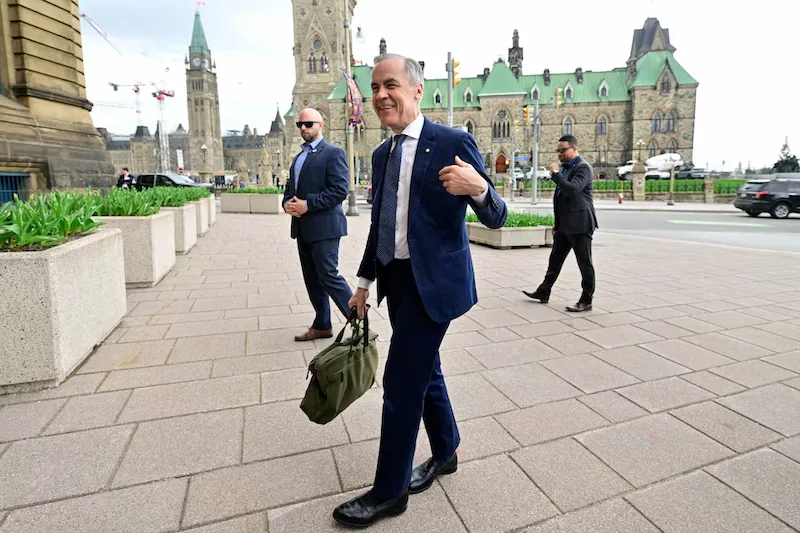


In a surprising turn of events, Canadian Prime Minister Mark Carney secured a comeback victory for the governing Liberals in Monday's election, solidifying his position as a global leader championing multilateralism in the face of U.S. President Donald Trump's protectionist policies. Carney, the first person to have led two G7 central banks, brings a wealth of experience that experts believe will immediately bolster his international credibility on the global stage.
Despite initial trailing in the polls, Carney's tough stance towards Trump resonated with voters, positioning him as a beacon of international cooperation and free exchange. Defeating the Conservatives, who mirrored Trump's rhetoric with a "Canada First" campaign led by Pierre Poilievre, Carney's victory signaled a shift towards center-left values in response to the global fallout caused by Trump's policies.
As Canada's newly re-elected prime minister, Carney faces the challenge of leading a minority government, fostering alliances with smaller parties to maintain stability. With Australia's upcoming election showing a surge towards Carney, it seems his anti-Trump stance and commitment to global cooperation are resonating beyond Canadian borders, influencing political shifts in other countries as well.
Carney's robust economic background positions him well to prioritize fortifying Canada's economy amidst looming threats from U.S. tariffs. By expanding trade with Europe, Australia, and Asian democracies, Carney aims to offset the economic impact of Trump's trade policies. Additionally, advancing infrastructure projects to reduce dependency on the U.S. for oil exports is slated as a key initiative.
Navigating a delicate balance between rallying like-minded nations and avoiding direct confrontation with Trump presents a challenge for Carney. While his calm demeanor and financial expertise may foster constructive dialogue, he aims to work collaboratively with the U.S. president on shared interests while spearheading initiatives to reduce Canada's reliance on American defense procurement.
Carney's victory holds implications beyond Canada, signaling a global shift away from Trump-like policies in other countries. As center-right parties face backlash due to Trump's actions, Carney's win sets a precedent for center-left leaders. Advisers suggest a move towards distancing from the MAGA philosophy to resonate with voters disillusioned by Trump's divisive policies.
In summary, Carney's election triumph not only secures his leadership in Canada but also establishes him as a key figure in the global political arena, championing cooperation and economic resilience in the face of protectionism and uncertainty caused by Trump's policies.