


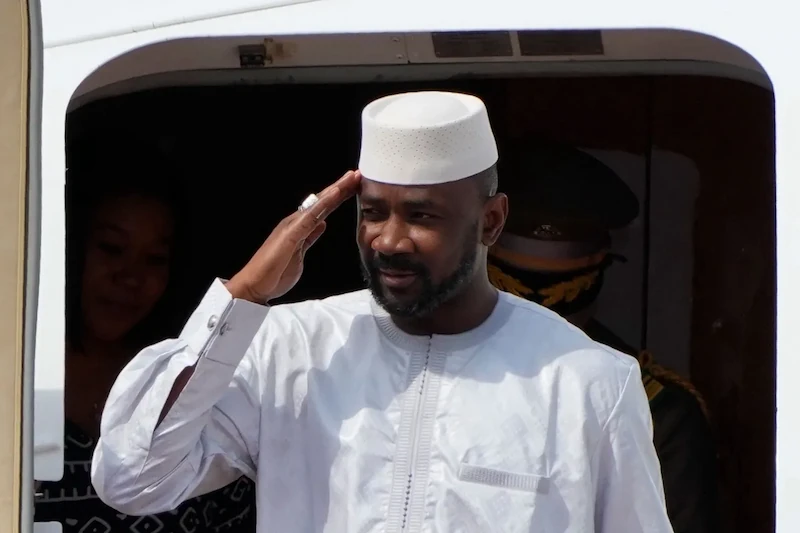


In a recent forum organized by Mali’s army-led government, a proposal was put forward suggesting that junta leader Assimi Goita should remain in power for an additional five years. This recommendation follows Goita's interim leadership since a coup in 2021 and calls for his elevation to the position of president, allowing him to rule until "peace is restored." The suggestions made in the forum, held in the capital, Bamako, also include the dissolution of all political parties, ultimately aiming for Goita to stay in power until 2030.
This move represents a worrying trend in West Africa's Sahel region, where military takeovers have become more prevalent. Similar extensions of military rule have taken place in Niger and Burkina Faso in recent years, with both countries postponing elections indefinitely. The proposed extension of Goita's rule highlights a concerning retreat from democratic governance in the region.
Ulf Laessing, the Sahel program director at the Konrad Adenauer Stiftung, noted that the extension of military rule in the Sahel region is part of a broader trend that includes Niger and Burkina Faso. He highlighted the strengthening of the Alliance for Sahel States and the increasing influence of external actors, such as Russia, in the region as a result of these developments.
In Burkina Faso, junta leader Ibrahim Traoré has echoed similar sentiments, citing the need to regain control of territory from Islamist militants before holding elections. The ongoing security challenges in the region have been cited as reasons for delaying the transition back to civilian rule.
The proposed extension of Assimi Goita's rule in Mali raises concerns about the future of democracy in West Africa and the potential consequences of continued military involvement in governance.