


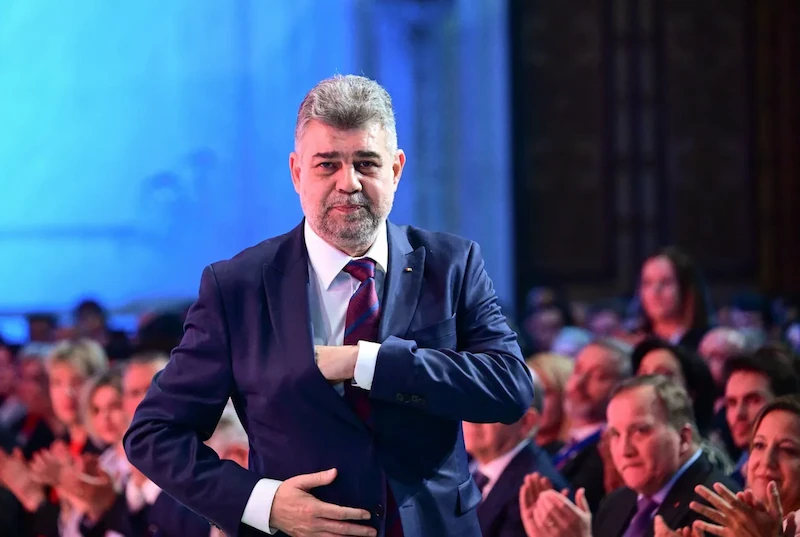


In a surprising turn of events, Romania finds itself in a state of political upheaval as Prime Minister Marcel Ciolacu resigns following the victory of far-right leader George Simion in the first round of the presidential election. The coalition government, comprised of the Social Democrats, Liberals, and another party, faced a setback as their preferred candidate was eliminated from the race. Ciolacu acknowledged the lack of coalition legitimacy and announced his resignation, signaling the potential for a new premier to be nominated after the May 18 runoff.
The victory of George Simion, known for his ultranationalist views and controversial stances on foreign policy, has stirred concerns both domestically and internationally. His candidacy has divided the coalition partners, with the Social Democrats choosing not to endorse any candidate, while the Liberals and other parties rallied behind the centrist mayor of Bucharest, Nicusor Dan, in a bid to counter the far-right surge.
The upcoming presidential runoff between Simion and Dan is expected to be a closely contested race, with implications for the country's future direction. The eventual winner will have the authority to nominate a new prime minister, potentially prolonging the political uncertainty in Romania. The possibility of a snap election looms if coalition-building efforts fail, further adding to the country's economic and political challenges.
The ramifications of Simion's victory extend beyond Romania, as concerns mount over the country's reliability as a Western partner, particularly within NATO and the European Union. The markets have reacted negatively to the uncertainty, with Romanian bonds and stocks experiencing significant losses following the election results. The far-right's rise in Romanian politics, coupled with past controversies surrounding electoral interference, has deepened the turmoil within the country's political landscape.
As Romania navigates this period of instability and uncertainty, the outcome of the presidential runoff will not only shape the country's domestic policies but also its standing on the international stage. With the potential for a new leader with far-right leanings, Romania faces a challenging road ahead as it seeks to address pressing economic and political issues while maintaining its partnerships with Western allies.