


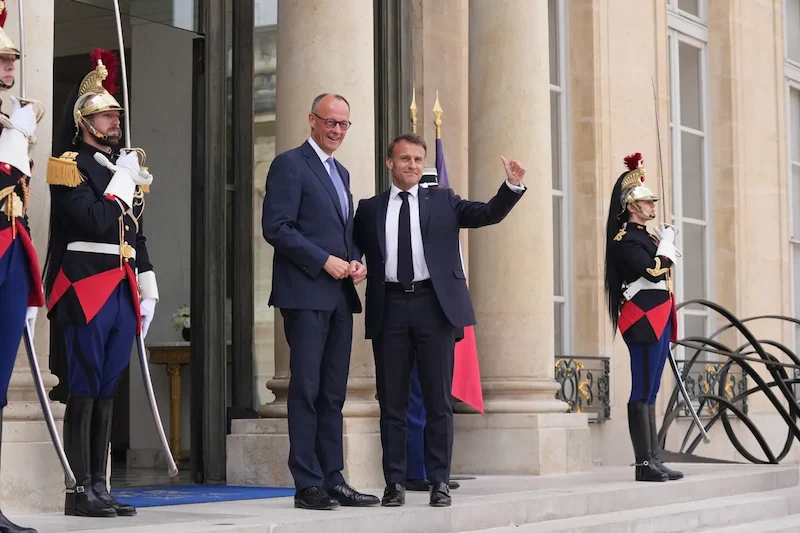


In a historic move to revitalize the Franco-German relationship, newly appointed German Chancellor Friedrich Merz and French President Emmanuel Macron have pledged to reset ties and join forces to bolster the European Union's defense capabilities and competitiveness. The two leaders, in a joint article for Le Figaro newspaper, emphasized the necessity of cooperation in the face of escalating global challenges, including the war in Ukraine, climate change, technological advancements, and trade disputes.
Merz's symbolic choice of France for his first foreign trip underscores his commitment to strengthening EU unity and cooperation. The conservative leader aims to establish a strong partnership with Macron to tackle key European policy issues, such as security, competitiveness, and convergence. Both leaders expressed their determination to enhance Europe's sovereignty and resilience in the wake of Russia's aggression in Ukraine.
Highlighting the need for a mutually beneficial trade and investment agenda with the United States, Merz and Macron underscored their commitment to safeguarding EU interests and responding robustly to any adverse actions. They emphasized the importance of ensuring strong European responses to external challenges and utilizing the EU's tools effectively to protect common interests.
Merz's visit to Paris comes after a challenging parliamentary confirmation process that tested the strength of his coalition government. Despite these hurdles, Merz remains steadfast in his goal to prioritize European policy and foreign relations during his tenure. With a focus on bolstering the EU's defense capabilities within NATO, promoting joint procurement projects, and increasing military equipment production, Merz is poised to lead Europe forward in a time of global uncertainty.
As he heads to Warsaw for discussions with Polish leaders on irregular migration, the war in Ukraine, and defense, Merz and his allies are committed to taking immediate action to prevent illegal immigration into Germany. These measures come in response to the rise of far-right political movements, with the goal of maintaining stability and security within the EU. Germany's new interior minister is set to announce further border control measures, sparking concerns about potential disruptions to intra-EU travel and trade.
Despite these challenges, Merz and Macron's alliance signals a new era of collaboration and unity within the EU. By reaffirming their commitment to European integration, sovereignty, and security, the two leaders aim to navigate the complex geopolitical landscape and propel the EU towards a more resilient and competitive future.