


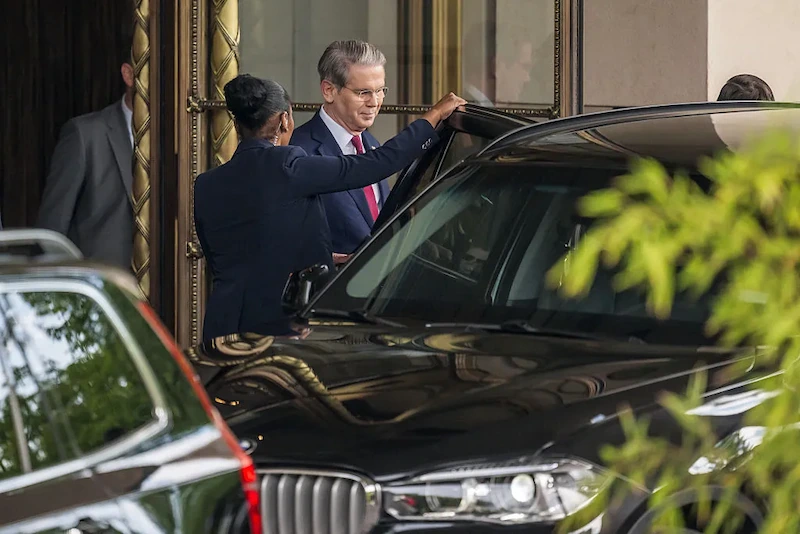


In an unprecedented and pivotal move, senior negotiators from the United States and China engaged in intensive discussions over the weekend in Switzerland in an attempt to defuse the escalating trade war that has rattled global markets and raised fears of economic fallout. Led by US Treasury Secretary Scott Bessent and Chinese Vice Premier He Lifeng, the closed-door talks in Geneva marked a crucial opportunity for both sides to find common ground and alleviate the mounting pressures of retaliatory tariffs.
The talks, extending across two days, witnessed a display of confidence from both the US and Chinese delegations, despite the inherent risks involved in the current deadlock. President Donald Trump's imposition of hefty tariffs on Chinese imports and Beijing's subsequent retaliatory measures have set the stage for a standoff that could have far-reaching consequences, including product shortages, price hikes for consumers, and disruptions in global supply chains.
As negotiators navigated complex issues at the Swiss mission to the United Nations, there was a sense of cautious optimism regarding the potential for a breakthrough. Both countries are acutely aware of the economic stakes at hand, with the combined GDP of their economies hanging in the balance. The latest estimates suggest that maintaining current tariff levels could result in a catastrophic 90% decline in bilateral trade.
Meanwhile, the ripple effects of the trade dispute have already begun to manifest, with a sharp decrease in shipping volumes from China to the US and signs of economic strain in Chinese manufacturing sectors. As the two economic powerhouses engage in a high-stakes game of negotiations, the global economy braces for further uncertainty and potential downturns.
President Trump's steadfast goal of achieving trade rebalancing underscores the underlying motives driving the negotiations, with a focus on securing greater market access for American goods in China. However, Beijing sees the conflict as emblematic of broader geopolitical tensions and views tariffs as a tool to contain its rise on the global stage.
As the talks progress, the world watches with bated breath, recognizing the pivotal role that US-China relations play in shaping the future of international trade. Amidst geopolitical complexities and economic intricacies, the path to a resolution remains uncertain, but the dialogue in Switzerland offers a glimmer of hope for de-escalation and potential progress towards a mutually beneficial agreement.