


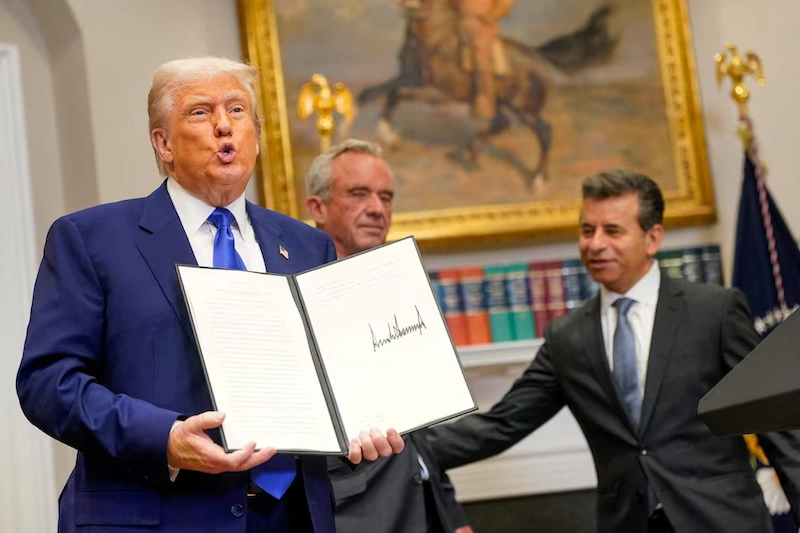


In a bold move aimed at tackling the high prices of prescription drugs in the United States, President Donald Trump signed a far-reaching executive order on Monday. The order mandates drugmakers to lower their prices to match those paid in other countries, setting price targets to be achieved within 30 days. If significant progress is not made within six months, the government will take further action to enforce price reductions.
During a press conference, Trump emphasized the need for all citizens to pay equal prices for medications, citing disparities between what Americans pay compared to other developed nations. He proposed significant price cuts of up to 90% to align with international standards. Investors initially expressed doubts about the feasibility of the order's implementation, but stock prices rebounded in early trading following the announcement.
The executive order would implement tariffs on companies that fail to match prices with other countries. Previous attempts to address drug pricing disparities have been hampered by legal challenges, but Trump remains committed to fulfilling his campaign promise of lowering prices for everyday commodities.
Trump recounted a conversation with a friend who highlighted the vast price difference of a medication between the U.S. and London, inspiring the need for immediate action. The order also seeks to address anti-competitive practices within the pharmaceutical industry, with plans to consider importing drugs and enforcing regulations to enhance competition.
While the order received mixed reactions from the industry, with trade groups expressing concerns over the impact on innovation and investment, the Federal Trade Commission is prepared to support the government's efforts against anti-competitive behaviors. Legal challenges are expected, particularly regarding the expansion of regulations beyond existing statutes.
Major drugmakers initially saw declines in their stock values, but rallied later in response to the executive order. Trump's directive diverged from industry expectations, suggesting broader reforms than anticipated. The order also explores facilitating direct-to-consumer purchasing programs and reviewing export strategies that may contribute to pricing discrepancies.
As the government prepares to enforce price reductions and enhance competition in the pharmaceutical sector, the impact of Trump's executive order on drug prices in the U.S. remains a focal point of discussion and anticipation.