


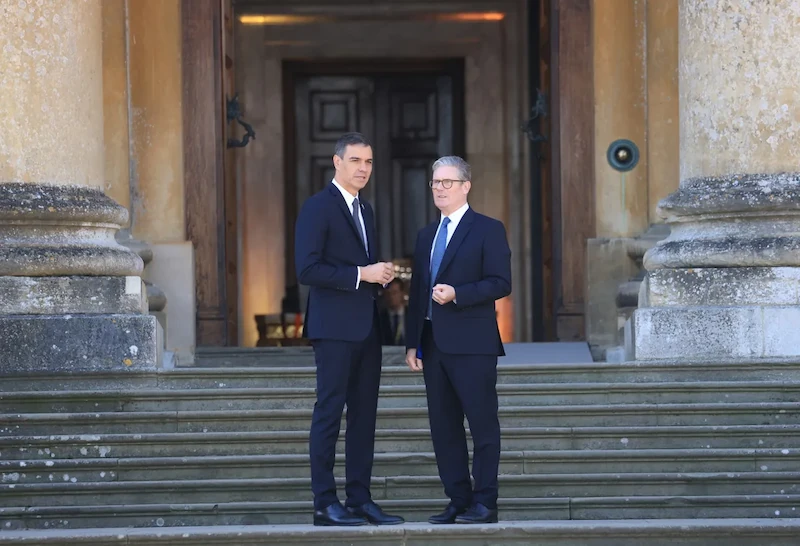


In the sweltering heat outside the historic Blenheim Palace, Keir Starmer, the new Prime Minister of the United Kingdom, found himself facing a formidable challenge as he sought to reset the country's relationship with the European Union. Hosting European leaders amidst the grandeur of the palace grounds, Starmer's aspirations for deepened cooperation faced a pivotal moment in a tense conversation with Spanish Prime Minister Pedro Sanchez. As the two leaders discussed a potential defense and security pact, Sanchez presented his conditions—namely, a youth mobility deal and smoother access for Spanish contract workers to the UK.
These demands, which risked testing Starmer's stance on immigration, highlighted the complexities of post-Brexit negotiations. Despite warm gestures of friendship and collaboration, Starmer soon realized that achieving his vision of a harmonious UK-EU partnership would require navigating through challenging terrain. A subsequent briefing from EU ambassador Pedro Serrano underscored the need for patience and perseverance in the face of differing priorities and red lines on both sides.
As Starmer prepares to meet European Commission President Ursula von der Leyen in London, the outcome of months of negotiations hangs in the balance. The proposed agreements on defense and security, future cooperation, and navigating uncertain geopolitical landscapes mark a significant step towards reconciliation between Britain and Europe. However, the path to this milestone has been fraught with obstacles, signaling that building a new, cooperative relationship will require more than just diplomatic niceties.
Economic considerations loom large in the discussions, with the UK's reluctance to rejoin the EU's single market or customs union posing a hurdle to meaningful progress. Bridging this gap will require careful navigation to avoid cherry-picking favorable terms while sidestepping vital aspects like free movement of people and regulatory alignment. Starmer's focus on border control reflects the shifting political landscape, as he balances liberal inclinations with the need to address public concerns over immigration.
Amidst the backdrop of global uncertainty, the Ukraine conflict and challenges from leaders like Trump and Putin have paved the way for enhanced collaboration on defense, intelligence sharing, and economic partnerships between the UK and the EU. Yet, as negotiations reach a crucial juncture, key issues such as youth visas and fishing rights remain unresolved, signaling that tough decisions lie ahead.
In the lead-up to the UK-EU summit, tension simmers as both sides strive to find common ground while safeguarding their respective red lines. Starmer's high-stakes discussions with EU counterparts in Tirana, Albania, offer a last-minute opportunity to bridge divides and finalize agreements. As Defense Secretary John Healey aptly notes, the negotiation process is entering its most challenging phase, requiring deft maneuvering and strategic compromises.
The intertwined issues of defense, economics, and fishing rights exemplify the intricate dance of diplomacy between the UK and the EU. The delicate balance between cooperation and competition mirrors the broader political landscape, where populist sentiments and concerns over sovereignty shape the negotiations. Ultimately, a successful outcome hinges on mutual respect for boundaries and a commitment to forging a new chapter in UK-EU relations, one that navigates the complexities of a post-Brexit world.