


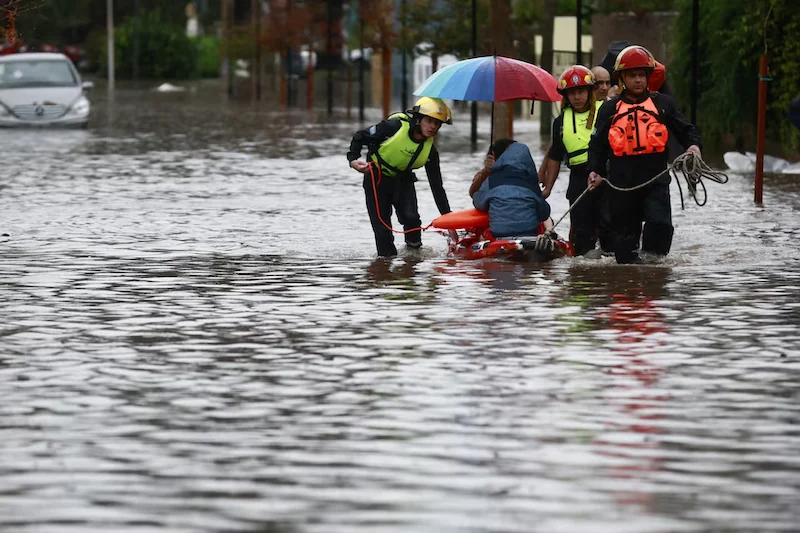


As torrential rains pound the north of Argentina's Buenos Aires province, a crucial agricultural area, thousands of residents have been forced to flee their homes to escape the rising floodwaters. The National Meteorological Service issued a red alert for the region, warning of intense rainfall ranging from 150 to 250mm between the cities of Zarate and Arrecifes. The storm systems, continually regenerating, show no signs of relenting, with forecasts predicting more precipitation.
Heart-wrenching scenes unfolded as residents in Zarate, located 100 km from the capital, were seen maneuvering through inundated streets in boats laden with their belongings. In one harrowing incident, a long-distance bus carrying 44 passengers found itself stranded on Route 9 near Zarate, its driver recounting how the floodwaters quickly engulfed everything inside.
The town of San Antonio de Areco bore the brunt of the downpour, with over 260mm recorded in just 24 hours – a volume described by local mayor Francisco Ratto as seldom seen. The excessive rainfall spells trouble for the agricultural sector, with fears of extended delays to the soybean harvest, a critical industry in the region.
Given Argentina's status as a leading global exporter of soybean meal and oil, as well as a significant player in corn and wheat exports, the cascading effects of the flooding could have far-reaching implications on the country's economy. As the nation grapples with both the immediate aftermath of the flooding and the looming impact on its agricultural output, the resilience of its residents and the responsiveness of its emergency services will be put to the test.