


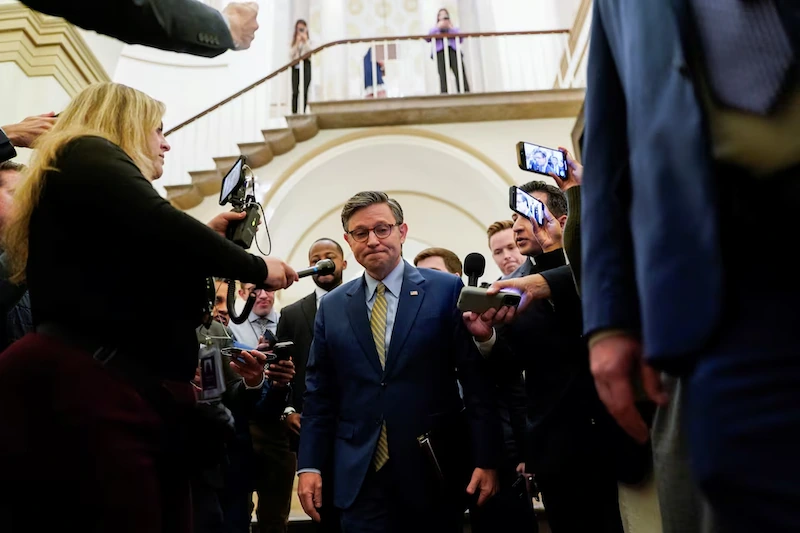


In a tense and closely-watched vote, the Republican-led U.S. House of Representatives successfully ushered a wide-ranging tax and spending bill through the legislative process. The bill, deemed a cornerstone of President Donald Trump's policy initiatives, promises to enact a significant portion of his populist campaign promises, including new tax breaks and increased funding for military and border security endeavors.
Despite the single-vote margin that secured its passage, the bill has been met with strong backlash from opposition members, citing concerns over the substantial burden of debt it is anticipated to place on the nation. Independent analyses project that the legislation could add a staggering $3.8 trillion to the already substantial federal debt over the next decade.
The marathon push to pass the bill saw lawmakers engaged in heated debates over its contents, with all Democrats and a few Republican dissenters vocalizing their opposition. Notably, a Republican lawmaker missed the vote due to unintended slumber, underscoring the high-stakes nature of the proceedings.
Speaker Mike Johnson, relieved by the bill's passage, lauded it as a transformative piece of legislation with far-reaching implications for the nation. With a narrowly held majority, compromises were made to appease various factions within the Republican fold, ensuring the bill's progression to the Senate.
Meanwhile, senators, acknowledging the need for further scrutiny, are poised to delve into deliberations over potential amendments to the bill. Key components of the legislation include extensions of previous tax cuts, adjustments to energy incentives, and tightened eligibility criteria for social welfare programs.
Critics decry the bill as disproportionately favoring the affluent while imposing cuts on essential services for low-income Americans. The Congressional Budget Office's assessment reveals a concerning disparity in economic impact, with benefits skewed towards the top echelons of society.
Amid mounting apprehension about the nation's escalating debt levels, concerns are raised over the bill's potential exacerbation of the fiscal crisis. Moody's recent credit rating downgrade signals the gravity of the situation, as interest payments threaten to eclipse vital government expenditures in the coming years.
As the bill traverses the legislative landscape, the nation finds itself at a pivotal juncture, grappling with the implications of a substantial increase in spending and a deepening fiscal crevasse. The choices made by lawmakers in the coming days are poised to shape the economic trajectory of the country for years to come.