


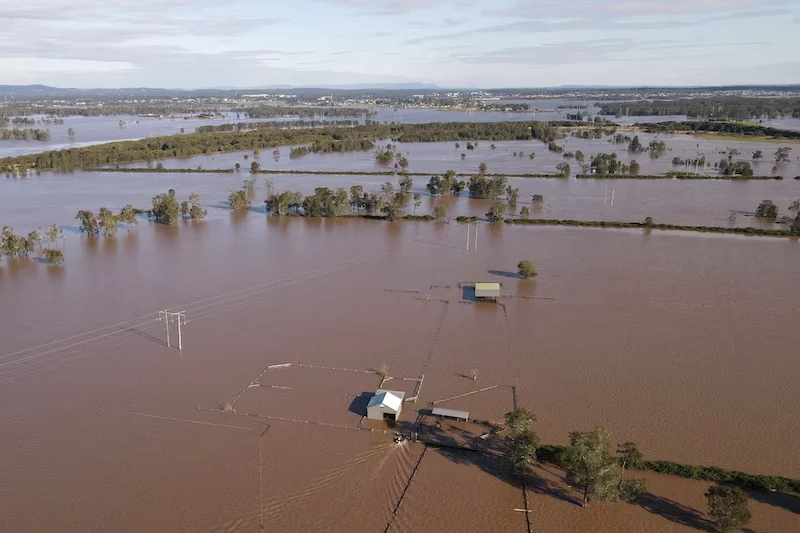


In response to the recent catastrophic floods that struck Australia's southeast, Prime Minister Anthony Albanese announced on Saturday that the clean-up efforts have commenced. The floods, which resulted in the tragic loss of five lives and the inundation of over 10,000 properties, have prompted a unified effort across federal, state, and local government levels to provide essential support to affected communities.
The severe impact of the floods was particularly significant in New South Wales' mid-north coast region, where towns were cut off, livestock were swept away, and homes were destroyed. Initial damage assessments suggested that at least 10,000 properties have been affected, underscoring the extent of the disaster. Despite the grim situation, there have been signs of improvement in the affected areas of the state.
State Emergency Services commissioner Mike Wassing highlighted the ongoing challenges faced by hundreds of flood-affected residents who are still seeking refuge in evacuation centers. Overnight operations included 52 flood rescues, underscoring the urgency of the situation. Tragically, the latest fatality reported was an elderly man who was found at a flooded property near Taree, a town significantly impacted by the floods. Prime Minister Albanese expressed his sorrow, emphasizing the importance of supporting the affected individuals and communities during this difficult time.
The recent floods, triggered by persistent rainfall, caused widespread chaos in mid-north coast towns. Intersections and street signs were submerged, and vehicles were left partially submerged, illustrating the magnitude of the disaster. At its peak, the floods left around 50,000 people isolated, further exacerbating the crisis.
These unprecedented weather events in Australia have raised concerns among experts, with some attributing these disasters to the impacts of climate change. The sequence of extreme weather events, from droughts to bushfires and now recurrent floods, underscores the urgent need for proactive measures to address the challenges posed by a rapidly changing climate.