


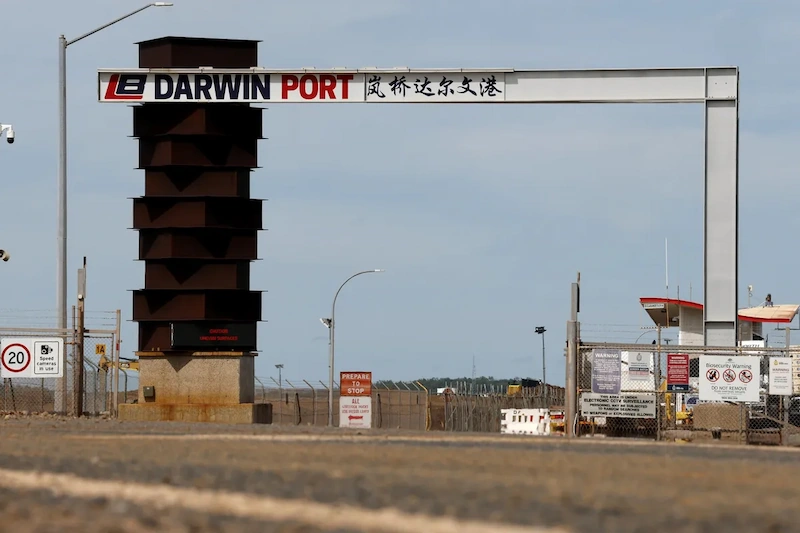


Prime Minister Anthony Albanese finds himself at a crossroads, balancing diplomatic relations with China and a promise to regain control of the strategically significant Port of Darwin. The port, currently leased to Chinese company Landbridge Group for 99 years, has been at the center of political controversy and international scrutiny since 2015.
Before the recent election, Albanese vowed to bring the port back under Australian ownership, a move that could potentially strain relations with China, the country's largest trading partner. The delicate situation highlights the complex dynamics at play in Australia's relationships with both China and the United States.
The potential nationalization or sale of the port has generated interest from investors both locally and abroad. Australia's close economic ties with China, coupled with its security alliance with the US, create a high-stakes scenario for Albanese as he navigates the port dispute.
While China has expressed concern over the handling of the lease and warned against unfair treatment of Landbridge, the Australian government is exploring various options, including potential private ownership by Australian entities or a buyout of the current lease.
The Port of Darwin's strategic location near Southeast Asia adds another layer of significance to the dispute, with implications for regional trade and security. As Chinese investments in overseas ports continue to draw attention, the fate of the Port of Darwin remains a focal point in the broader geopolitical context.
With global scrutiny on how Australia manages this critical issue, Albanese faces the challenging task of upholding diplomatic relations while fulfilling his commitment to regain control of the port. As discussions and negotiations unfold, the decisions made in the coming weeks could have far-reaching implications for Australia's foreign policy and economic landscape.