


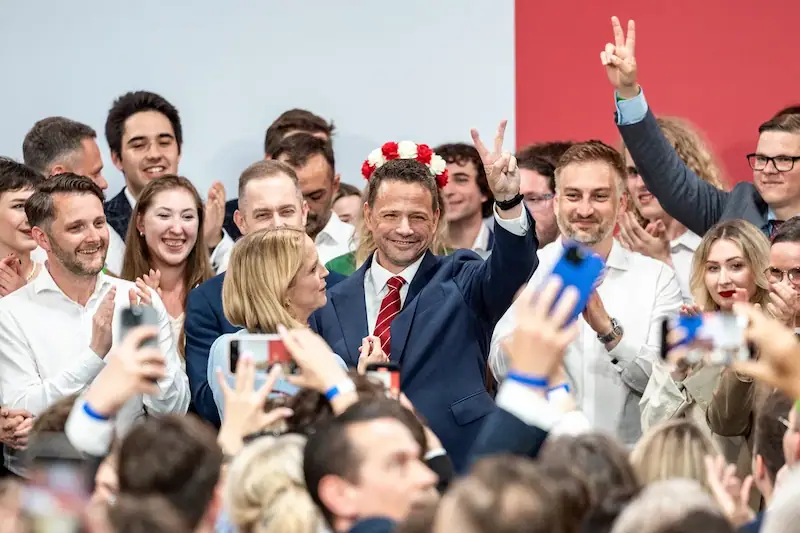


In a closely-watched presidential election in Poland, the centrist mayor of Warsaw, Rafal Trzaskowski, has taken a narrow lead over nationalist candidate Karol Nawrocki, according to exit polls. The outcome of this election holds significant implications for Poland's stance within the European Union and NATO, particularly in the face of external pressures such as Trump’s tariffs and Russia’s geopolitical assertiveness.
Reflecting a deeply polarized electorate, the exit polls revealed a tight race, with Trzaskowski securing 50.3% of the vote to Nawrocki's 49.7%. Both candidates have expressed confidence in their victory, with Trzaskowski emphasizing the need to move forward, while Nawrocki remained optimistic about the final results.
The election is seen as pivotal for the agenda of Prime Minister Donald Tusk, who aims to steer Poland back towards the EU mainstream following years of nationalist rule. Tusk's program has faced opposition from outgoing President Andrzej Duda, a nationalist ally, signaling the importance of the presidential outcome in advancing Tusk's vision for Poland.
With Nawrocki posing a challenge to Tusk's pro-EU platform, the election outcome will shape Poland's future engagement with the EU, women's rights, national identity, and support for neighboring Ukraine. Additionally, the ballot will serve as a barometer for the country's economic prospects, which have seen a significant uptick under Tusk's governance.
The closeness of this election echoes recent political trends in Europe, as seen in Romania's presidential race where a centrist mayor triumphed over a far-right candidate aligned with Trump. This signals a nuanced response to Trump's influence in European politics, highlighting the complexities of transatlantic relations in the current global landscape.
As the official results are awaited, the specter of polarization and ideological divisions looms large over Poland. The outcome of this election will not only determine the country's leadership but also its trajectory within the EU and on the international stage, amidst a backdrop of evolving global challenges and opportunities.