


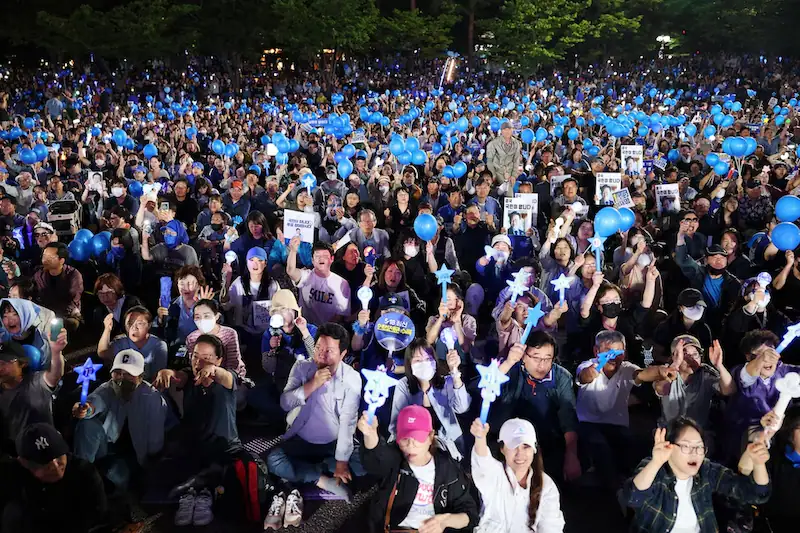


Amidst six months of political upheaval and economic challenges, South Korea is gearing up for a pivotal presidential election to be held on Tuesday. The country has been grappling with the aftermath of a brief imposition of martial law by former leader Yoon Suk Yeol, which tarnished its image as a vibrant democracy. The incoming president will face the daunting task of unifying a society still reeling from the shock of militaristic intervention and navigating an export-heavy economy plagued by unpredictable trade policies from the United States.
The frontrunners in the election, liberal candidate Lee Jae-myung and conservative contender Kim Moon-soo, have both vowed to bring about change in a political system and economic framework that they believe are no longer adequate for a modern South Korea. Lee emphasizes the need for greater social equity and support for middle-to-low-income households, while Kim advocates for reducing regulations and labor conflicts to promote business growth.
However, the shadow of Yoon's failed martial law attempt looms large over the election. Lee has characterized the vote as a "judgment day" against Kim and his People Power Party, accusing them of passively allowing the martial law incident to unfold. On the other hand, Kim has branded Lee as a "dictator" and warned of potential collaboration between Lee's party and him to amend laws at will.
Lee currently holds a lead in the polls, with a 14-percentage-point advantage over Kim according to recent surveys. The election process will include early voting and a high expected turnout on election day, with results anticipated to be announced following rigorous ballot counting procedures. The National Election Commission is set to certify the outcome on Wednesday, with the new president's inauguration expected shortly thereafter, marking the end of a tumultuous chapter in South Korea's political landscape.