


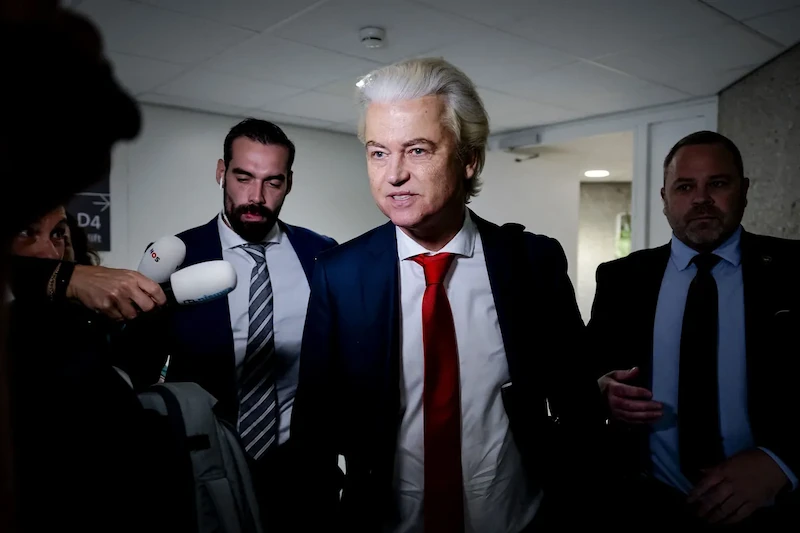


In a remarkable turn of events, far-right leader Geert Wilders has made the decision to withdraw his Freedom Party from the ruling coalition in the Netherlands, effectively causing the collapse of the government and potentially setting the stage for a snap election. The fissure in the coalition was triggered by the refusal of Wilders' three partners to support his stringent plans to restrict migration, which included proposals to close borders to asylum seekers, halt family reunification temporarily, and repatriate asylum seekers to Syria.
Wilders, in a televised interview, emphasized that his party had made a commitment to voters to implement the toughest asylum policy in Dutch history. When faced with the lack of agreement from his coalition partners, Wilders felt compelled to announce that his party would no longer support the current government. As a result, Wilders informed the Prime Minister of the withdrawal of his party's ministers from the cabinet.
The sudden departure of the Freedom Party has sent shockwaves through Dutch politics, leading to speculation about the next steps in the political landscape. It is anticipated that a new election will now be on the horizon, potentially bringing about significant changes. Prime Minister Dick Schoof is likely to step down, paving the way for the establishment of a caretaker government until a new administration can be formed.
While attempts may be made to salvage the coalition through alternative arrangements with new parties or by operating as a minority government, the prospect of a fresh election remains a prominent possibility if consensus cannot be reached. This development echoes a previous instance in 2023 when Mark Rutte's government also collapsed over migration issues, leading to a period of caretaker governance before a snap election was held.
The decision made by Geert Wilders has been met with criticism from his former coalition partners, who have denounced it as a "reckless kamikaze action" and accused Wilders of prioritizing his own interests over those of the country and his constituents. Nevertheless, Wilders' Freedom Party has seen a resurgence in support following his announcement of a new migration plan, reclaiming its status as the leading political force in recent polls.
Geert Wilders, a long-standing figure in Dutch politics known for his staunch stance on immigration and Islam, has been at the center of this political upheaval. Despite facing resistance from mainstream parties in the past, Wilders' electoral success has propelled him to a pivotal position within the political landscape. As the intricate web of Dutch politics continues to unravel, the repercussions of Wilders' decision to break away from the coalition are likely to reverberate across the country and beyond.