


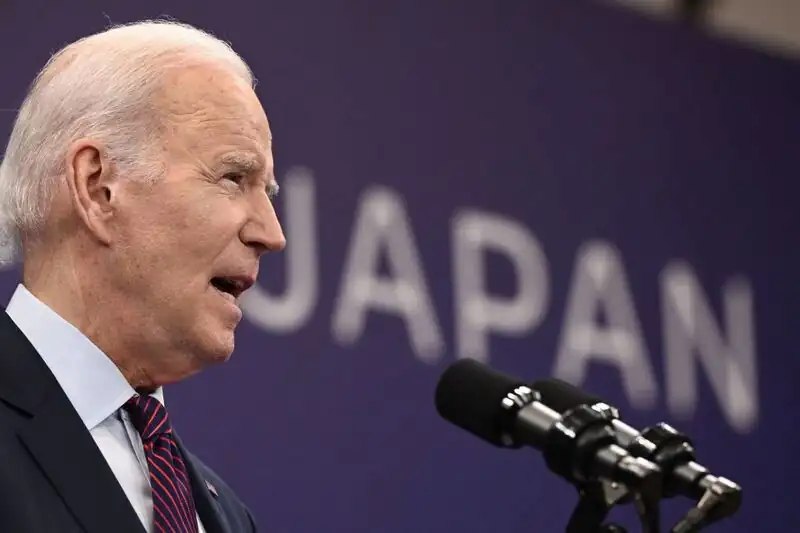


US President Joe Biden has expressed optimism that the strained relationship between the United States and China will improve "very shortly" following a recent dispute over an alleged spy balloon. Speaking to reporters at the end of the Group of Seven summit in Japan, Biden said that the US’s decision to shoot down a balloon carrying "two freight cars worth of spying equipment" had altered the dynamic between the two countries, which had been in decline since his last meeting with President Xi Jinping in November.
Biden also revealed that his administration was considering whether to lift sanctions on Chinese Defense Minister Li Shangfu, whom Defense Secretary Lloyd Austin is hoping to meet at an event in Singapore next month.
Despite the positive outlook, China has accused the US of trying to contain its rise by restricting access to advanced technology and supporting Taiwan, which Beijing claims as its territory. Biden reiterated that the US would intervene if China attempted to invade Taiwan, but added that there needs to be a “mutually agreed” outcome between Beijing and Taipei.
The G-7 leaders issued a communique over the weekend, calling for "constructive and stable" relations with China while reducing dependence on Beijing for critical supply chains. They emphasized that they were "not decoupling or turning inwards," and that "economic resilience requires de-risking and diversifying."
Despite the ongoing tensions, the White House has recently engaged China on several fronts. US National Security Adviser Jake Sullivan met with China's top diplomat Wang Yi in Vienna last week, and China's Commerce Minister Wang Wentao is scheduled to meet with both US Commerce Secretary Gina Raimondo in Washington and US Trade Representative Katherine Tai in Detroit next week.
In response, China has hit back against a G-7 initiative to counter "economic coercion," accusing the US of politicizing trade relations and weaponizing economic sanctions and export controls. Over the weekend, China also announced that it had identified serious cybersecurity risks after reviewing Micron Technology Inc. and ordered operators of key information infrastructure to stop purchasing the US company's products.