




The United States is on the brink of a self-imposed economic disaster, as the Republican-controlled House of Representatives refuses to pay the country's debts unless President Joe Biden agrees on cuts to current and future spending and new curbs on social programs. Failure to reach a compromise to raise the government's borrowing authority within the next few days could result in the US losing its reputation as the stable anchor of the global economy. Millions of people could lose their retirement and veterans' benefits once the government exhausts its ability to pay its debts due to the borrowing cap set by Congress.
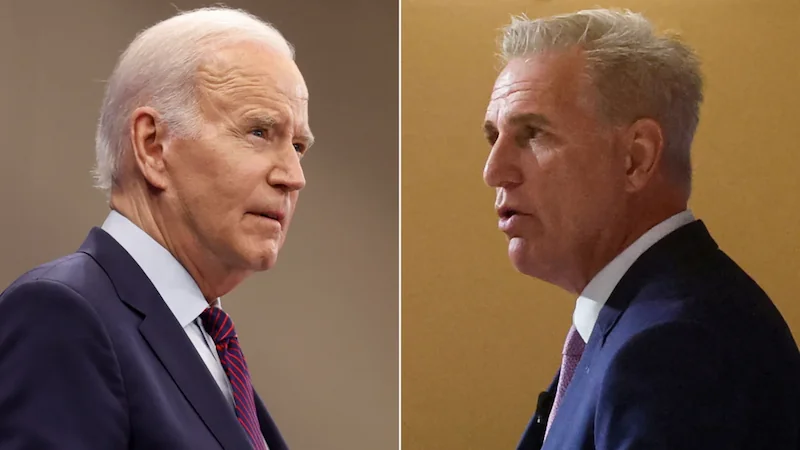
A US default would have a significant impact on the financial market, likely triggering a recession that would cause serious job losses and shatter an already fragile sense of economic security for many families. After a weekend of acrimony between negotiators for House Republicans and the White House, Biden will meet House Speaker Kevin McCarthy Monday for critical talks on pulling the economy back from the brink. The pressure on the meeting is immense, as Treasury Secretary Janet Yellen has warned that the government will be unable to meet its obligations unless Congress raises the debt ceiling by June 1.
There are concerns that serious economic damage may occur even before the June 1 deadline, as the mere suggestion that the crisis cannot be solved could send panic through financial markets and damage confidence in US creditworthiness. Biden has previously indicated that he will not negotiate over the debt limit, as it needs to be raised to pay for spending already authorized by Congress and authored by him and previous presidents. However, he has already backed down from this position. His officials say that it is irresponsible for the GOP to hold the country “hostage” on such a critical issue, while Republicans argue that the government is spending too much money and see the threat of financial calamity as their premier leverage against Biden.
While Biden was in Japan, where he was unable to reassure fellow world leaders that Washington would not tip the global economy into chaos, negotiators from both sides appeared to make progress before talks stalled, with each side blaming the other. The president suggested that some pro-Donald Trump House Republicans were willing to sabotage the economy in a bid to doom his reelection campaign.
Despite easing tensions after Biden and McCarthy spoke and agreed to continue talks, there is no guarantee that a deal between them would make it through Congress. Given his tiny House majority, the Californian Speaker is one of the weakest of modern times, and he may find it difficult to win GOP votes for a deal acceptable to Biden. Biden and McCarthy may also be struggling to balance pressures from their respective parties, including the GOP's quest to curtail some of the president's earlier achievements, including his efforts to fight climate change.
The primary victims of a default would be millions of Americans, but the fraught politics of the moment mean the careers of both Biden and McCarthy could depend on how their confrontation plays out in the coming days. While a Biden-McCarthy compromise may be the ideal solution, extremist elements in the House GOP could make that impossible. As a result, the US is heading towards an economic cataclysm of its own making, and it may take a significant effort from all parties to prevent it from happening.