


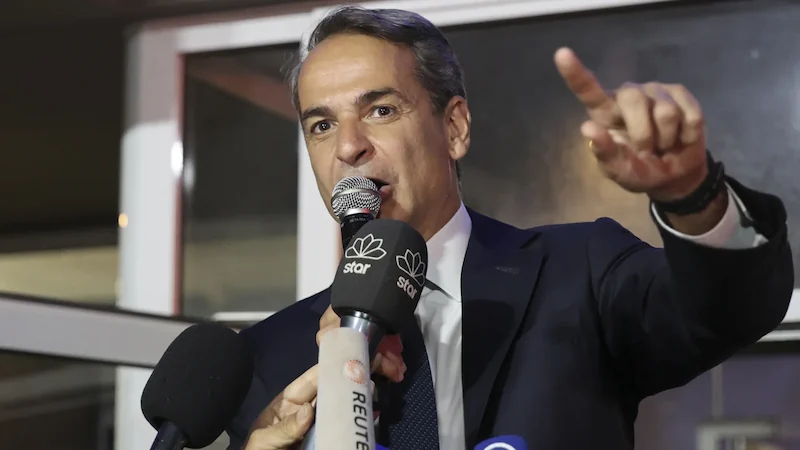


Greece's conservative New Democracy party has claimed a resounding victory in the parliamentary elections held on Sunday, but fell short of assuming an outright majority in the vote. The election was dominated by the country's high cost of living, the recent train tragedy that killed 57 people, and a wiretapping scandal that rocked the country's political class.
New Democracy, led by Prime Minister Kyriakos Mitsotakis, secured more than 40% of the votes, exceeding expectations and emerging as the clear winner in a result described by Mitsotakis as a "political earthquake". In contrast, his main opposition, the center-left Syriza party led by former prime minister Alexis Tsipras, suffered heavy losses and managed to secure just over 20% of total votes cast.
Despite the victory, Mitsotakis's party was unable to secure enough votes to govern alone, falling short of the 45% threshold under a new proportional representation system. As such, Mitsotakis opted not to form a coalition government by rejecting the mandate extended to him on Monday morning, hoping instead to organise a new election by the end of June.
Mitsotakis expressed hope for "a definitive government solution so our country can have an experienced hand at its helm as soon as possible”. The President will now invite the leaders of the second and third-place parties to try to form a coalition government. If this effort fails, Greece will revert to a caretaker government before the country proceeds to a second election that will be held under different rules, where the winning party needs only 37% of the votes.
During the campaign, Mitsotakis had sought to capitalise on the country's economic recovery and portray himself as the safest bet to improve the country's financial future. Despite the economic gains recorded since New Democracy came into power in 2019, many Greeks feel that their personal finances have remained strained. During the financial crisis earlier this decade, the country saw its GDP drop by a quarter, and many fell into poverty as a result of the austerity measures that were imposed.
With a significant number of Greeks already anticipating a second ballot, many voters opted to support smaller parties in the first round, as they expressed their frustration at the country's longstanding political establishment. However, analysts suggest that most of these voters will back the two main parties in the next election, hoping to see a strong government emerge that can deliver on the promises made to voters in the previous campaign.