


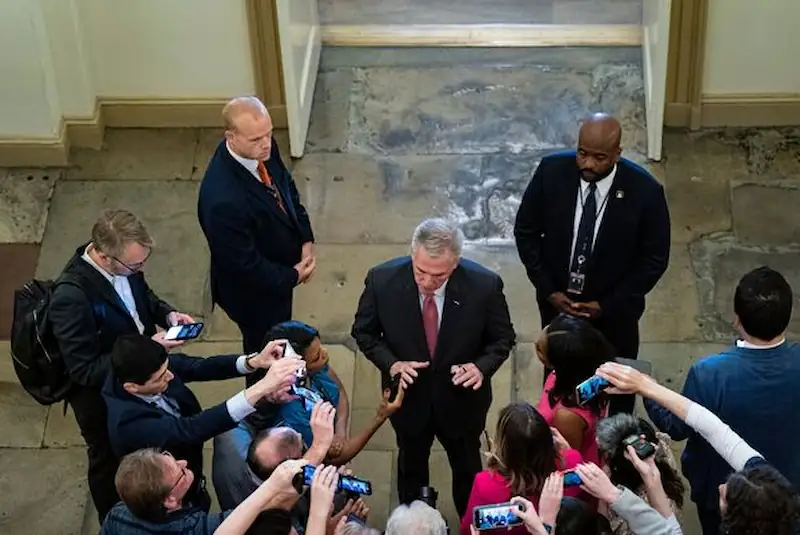


Negotiations between Republicans and the White House are said to be nearing an agreement to raise the debt limit and cap federal spending for the next two years. The clock is ticking as time is running out to avoid a catastrophic US default. This news has been met with positivity from traders, with the US stocks rising early Friday. However, this news is still tentative, and whilst the differences have narrowed between the two sides, the final accord is still not in hand. One of the key elements of the agreement is the increase in defense spending that would be permitted by 3%, in line with Joe Biden's proposed budget for next year.
The potential of a US default has been causing investors to lose confidence. However, yields on Treasury bills maturing in early June tumbled, a sign that investors are regaining confidence in on-time repayment. The two sides have yet to agree on the amount of the spending cap, causing concern to remain high amongst the wider population.
Deputy Treasury Secretary Wally Adeyemo commented on the negotiations, stating: “We’re making progress and our goal is to make sure that we get a deal because default is unacceptable.” Adeyemo also highlighted that if there is a default, payments to Social Security beneficiaries, veterans, and others would be delayed. He confidently stated that progress is being made and that he is hopeful that an agreement will be reached.
The proposed agreement would also include upgrading the nation's electric grid to accommodate renewable energy, a key climate goal. Alongside this, the agreement would also speed up permits for pipelines and other fossil fuel projects that the GOP favors. The deal would come at a cost; however, $10 billion would be cut from an $80 billion budget increase for the Internal Revenue Service that Biden won as part of his Inflation Reduction Act. There are concerns from Republicans who argue that this increase would lead to increased audits and agents.
The potential deal is far more limited than the opening offer from Republicans, who initially called for raising the debt ceiling through next March in exchange for 10 years of spending caps. The House Freedom Caucus has already expressed discontent, sending a letter to McCarthy demanding that he holds firm.
At present, the White House has not shared any word about agreements on spending caps or IRS funding. However, McCarthy has stated that they are working hard and plan to continue through the weekend. Should a deal be reached soon, Tuesday is emerging as the likely day for a House vote. The Senate would then have to act quickly to send it to Biden's desk before June 1, the date by which Treasury Secretary Janet Yellen has said her department could run out of cash. The following day sees a payment due to millions of Social Security beneficiaries, which puts pressure on politicians to resolve the impasse.
In conclusion, Fitch Ratings has placed the AAA credit rating for the US on watch for a potential downgrade, causing increased concern for all involved. The US lost its AAA grade at S&P Global Ratings in 2011 during a similar partisan standoff on the debt ceiling.