


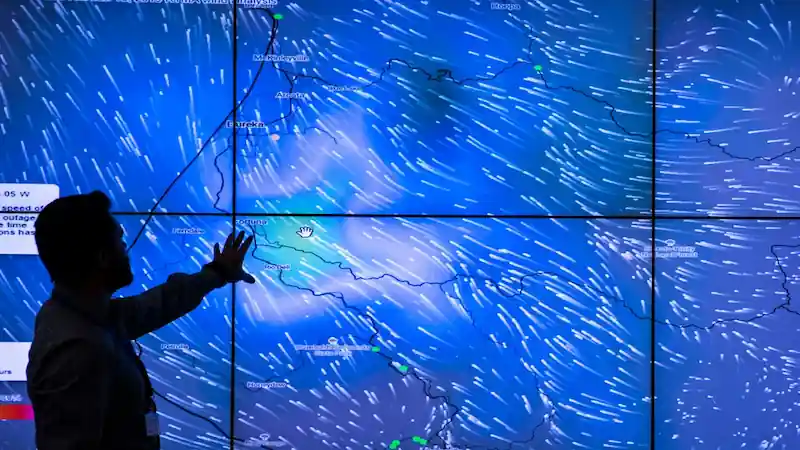


Meteorologists and climate communicators around the world are experiencing an increase in threats and abuse, often around accusations they are overstating, lying about or even controlling the weather. In Spain, the national weather agency, AEMET, has seen a rise in harassment, including the rehashing of an old conspiracy theory concerning chemtrails. Under many of the agency’s Twitter posts, especially those that refer to more extreme weather, users have posted images of blue skies, crisscrossed with wispy, white trails. They falsely claim the trails contain a cocktail of chemicals to artificially manipulate the weather – keeping rain away and causing climate change. Despite scientists’ statements that this theory is unfounded, a growing number of people seem to believe it, as extreme weather becomes much more frequent globally.
Apart from Spain, national weather services, meteorologists and climate communicators in countries from the US to Australia also report an increase in threats and abuse. In France, meteorologists have been accused of exaggerating the country’s drought and heat. In the UK, meteorologists reported unprecedented levels of online harassment during last year’s record-breaking heat wave which led to the first-ever “red warning” for heat.
Disinformation experts suggest that there may be a link between conspiracies that flourished during the Covid pandemic, when experts faced a slew of abuse, and the uptick in climate conspiracies. Climate misinformation on social media is particularly widespread and aggressive. This is causing erosion of trust in institutions and authoritative sources.
However, some experts attempt to fight against conspiracy theories by offering simple charts and rebuttals, while others choose to block bad-faith commenters on social media. Nevertheless, preventing the rise of conspiracy theories is easier than changing the minds of people that have strong beliefs in them. Communicating how the atmosphere works and addressing the myths seems to be the best way forward.