


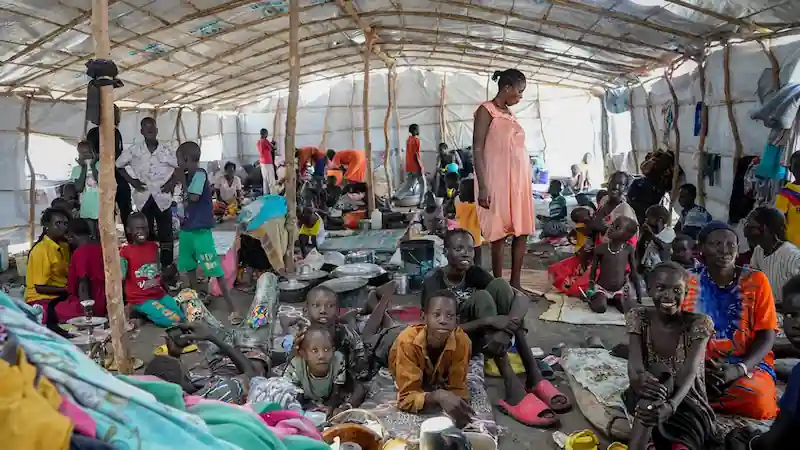


A new report from the United Nations Office for the Coordination of Humanitarian Affairs (OCHA) reveals that almost 1.4 million citizens have been displaced in Sudan due to conflict between rival generals since April. The report exposes the tremendous scale of the disaster in the African nation. Even before the fighting worsened, years of political instability in Sudan had led to millions of people being internally displaced. The country is also home to 1.13 million refugees from other conflict-ridden countries such as South Sudan, Eritrea, and Syria.
The recent violence has led to a fresh wave of people fleeing their homes, either to other parts of Sudan or to neighboring countries. The new estimate comes from various UN agencies. According to the UN’s International Organization for Migration’s Displacement Tracking Matrix, since the conflict broke out on 15 April, more than a million people have been internally displaced within Sudan alone.
According to the United Nations High Commissioner for Refugees (UNHCR), approximately 345,000 additional people fled Sudan into neighboring countries such as Ethiopia, Chad, and Egypt by 26 May. The UN Population Fund has reported a surge in gender-based and domestic violence throughout internally displaced Sudanese populations.
To make matters worse, the UN Special Representative of the Secretary-General on Sexual Violence in Conflict, Pramila Patten, has reported that sexual violence against women and girls, including rape allegations, has been recorded as being committed by the conflict's parties.
The current conflict between Sudan's Armed Forces (SAF) and the Rapid Support Forces (RSF) began in April, and it continues despite a seven-day ceasefire agreement that began on 22 May, brokered by Saudi Arabia and the UAE. There have been concerns of further escalation as the ceasefire is due to end on 31 May.
Thousands of foreign nationals have fled the country, but countless families have taken risky journeys from the capital Khartoum and other parts of Sudan, left to fend for themselves or flee to neighboring poverty-stricken countries.
According to the Federal Ministry of Health in Sudan, at least 730 individuals have been killed and around 5,500 others injured as of 23 May. The UN has also reported that at least eight" humanitarian workers and eight health workers have died since the conflict began.
The Preliminary Committee of Sudan Doctors’ Union has kept a separate toll according to which at least 850 people have been killed, and roughly 3,400 others have been wounded. Deadly attacks have been carried out across war-torn Sudan with reports of looting available in urban areas where civilian facilities have been damaged, including the looting of establishments such as banks, schools, government institutions, and humanitarian locations in Zalingi, a western Sudanese town.
According to the World Health Organization, there were at least 38 healthcare premises attacks in Sudan from 15 April onwards, including 22 healthcare facilities, six warehouses, and nine supply-related attacks. In Ad Du’ayn, located in the East Darfur, over 30 babies (six of whom were newborns) died because of a lack of oxygen and a power blackout. WHO reported that there are increasing reports of unexploded ordnance in Khartoum and other Sudanese urban areas on buildings, roads, and roadsides.
While humanitarian partners are attempting to rapidly transport relief supplies to where they are needed most, there is still a need for improved security and transportation in these areas.