


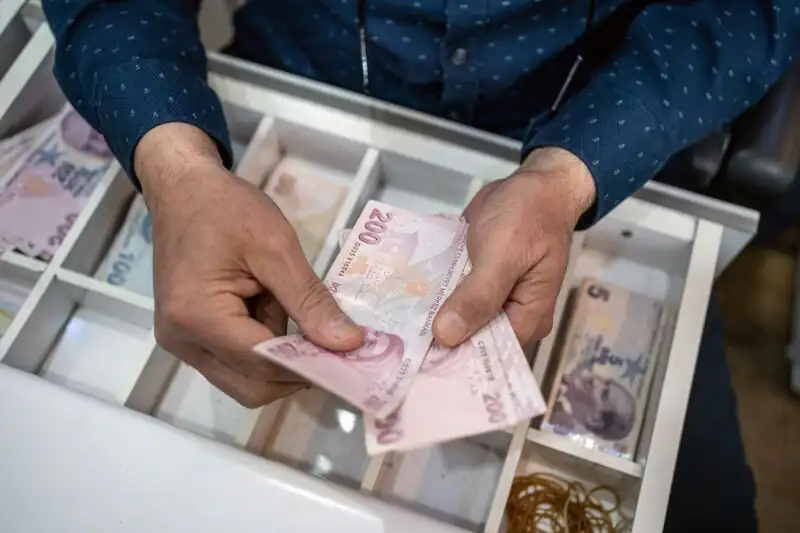


The Turkish lira has hit a record low as investors grow increasingly worried about the country's external financing needs, with limited foreign-currency reserves and over $200bn in debt payments due. The lira fell by up to 1.2% in value, and its decline has extended out to six consecutive days. This has magnified traders' concerns about Turkey's ability to finance debts given disappointing macroeconomic data as well as elevated tension and trade disputes with the US.
However, Turkish stocks have experienced their best daily gain in several weeks as experts predict that the country's new cabinet could lead to more orthodox economic policies. Specifically, the Borsa Istanbul Banks Index, which tracks shares of Turkish lenders, rose by 9.6% and was trading 9.3% higher as of 11:15 a.m. in Istanbul. The broader Borsa Istanbul 100 Index was up 3.5%, reflecting market optimism that Turkey's economic crisis can be improved.
This optimism is rooted in Turkish President Recep Tayyip Erdogan's meeting with Mehmet Simsek, a market-friendly former finance minister, in Ankara on Monday. Simsek is well-regarded amongst investors, and many anticipate that his involvement in Erdogan's administration could steer the nation towards a more orthodox economic model. Moreover, such a change in policy approach may mean that steps towards supporting the currency will be reduced as the focus shifts. This means that the lira may not receive the same level of support going forward, raising fears that any depreciation pressure over recent months could be unleashed. Nonetheless, due to the unpredictability of foreign exchange rates, it is difficult to predict precisely how this may impact the Turkish currency.
In particular, Turkey's sovereign dollar bonds are set to post among the worst monthly losses in emerging markets, with the notes losing 5.8% this month compared to the 1.6% average loss for emerging-market dollar bonds reported through the Bloomberg index. Despite the country's recent economic challenges, many investors await President Erdogan's decision on the makeup of his new cabinet, anticipating that it may open doors for further economic reforms and a brighter economic outlook.