


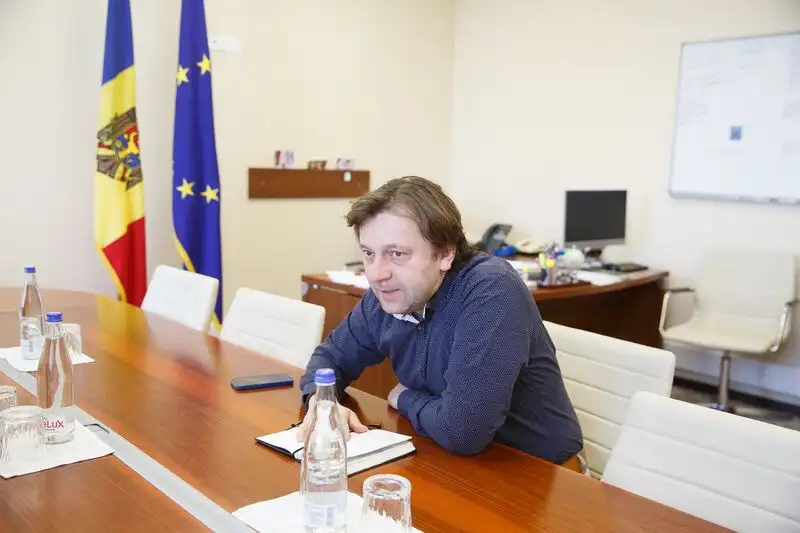


Moldova, one of the poorest countries in Europe, is planning to simplify its tax system as part of its efforts to recover from an economic crisis caused by the war in Ukraine. According to the country's Economy Minister Dumitru Alaiba, the changes will include a reworking of corporate law to increase transparency, and the elimination of most existing tax exemptions, which will come into effect by July.
One of the main objectives of this new approach will be to integrate Moldova's sprawling informal economy, which constitutes more than two-fifths of the country's output. Alaiba stated that regulating the "gray economy" is crucial to economic growth, as half of Moldova's economy fails to respond to any measures imposed by the government.
Moldova, a former Soviet republic with a population of 2.6 million people, is bordered by Romania and war-torn Ukraine. The country has faced challenges from a banking crisis, energy blackouts, and a reported plot by the Kremlin to topple the government.
However, under the leadership of pro-European President Maia Sandu, Moldova has managed to secure candidacy status from the European Union, and it aims to become a member by 2030. Despite Russian occupation, Sandu is confident that accession will occur, including the breakaway Transnistria region.
Regarding the economy, Alaiba says that drawing investors towards the "simplest fiscal system" will be pivotal to shedding the legacy of bank fraud and money laundering scandals. The government also aims to reduce bureaucracy and follow Estonia's lead by digitizing public services, such as tax payments and paperwork processing.
Moldova's GDP contracted by almost 6% in 2022, falling to approximately $15 billion and erasing half of the 14% growth it experienced the previous year. Inflation peaked at 30%, significantly affecting the purchasing power of its citizens. While Alaiba anticipates a rebound in growth this year, the current circumstances mean that it will not be "spectacular."
The proposed measures aim to generate double-digit economic growth over the next 10 years, which is essential for Moldova to increase living standards and converge with its western EU neighbors. With this in mind, President Sandu wants to initiate EU negotiations by the end of the year. Still, this means that the country must first meet EU requirements for judicial reform and strengthening institutions.
Moldova has struggled to recover from a banking fraud case in 2015, which totaled $1 billion and almost led to bankruptcy. Since then, the International Monetary Fund and the central bank have teamed up to help stabilize the banking sector and strengthen its supervision to prevent similar incidents.