


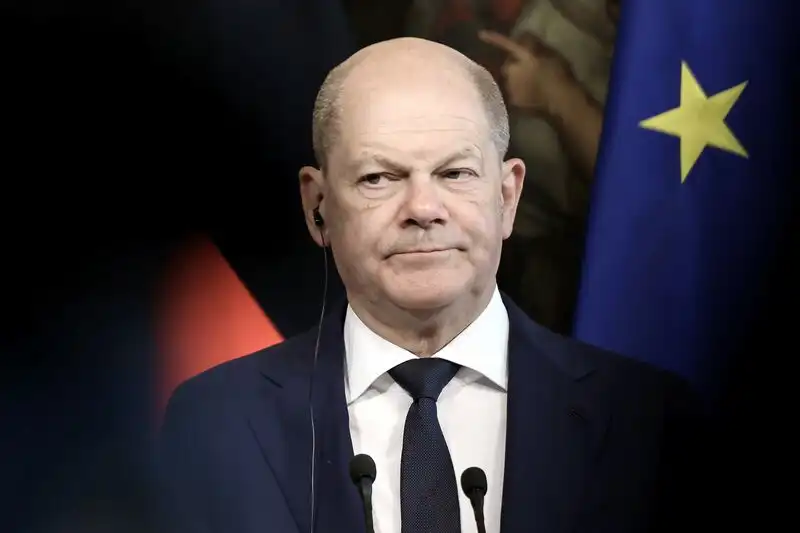


Germany's Finance Minister, Olaf Scholz, has announced that his cabinet will adopt a new national security strategy this week. This strategy has been designed to increase the economic resilience of Germany and aims to decrease the country's dependency on various sectors, including energy, raw materials, and critical technologies.
During a business forum promoting eastern Germany, Scholz highlighted the importance of forming new partnerships and expanding into new markets to combat the increasing complexities of the multi-polar world. The strategy emphasizes the need to avoid an overreliance on China and encourages European leaders to expedite trade talks with countries such as Indonesia, India, and Mexico.
Scholz has been urging German businesses to heavily explore the Asian market and avoid being solely reliant on China, which is their largest trading partner. This call is also aimed at preventing Germany from faltering as Europe's economic engine, as the country needs to quickly diversify its supply chain for importing key materials and expand its customer base for selling products such as automobiles.
However, the adoption of this strategy could prove difficult for Germany. Some of Germany's largest companies, including Siemens AG and Volkswagen AG, have pushed back against the move. Although, it is crucial for Germany to avoid a hard break with China, which accounted for nearly 8% of Germany's economy through total trade last year of almost €300 billion ($323 billion).
In conclusion, the adoption of the national security strategy in Germany highlights the need for the country to diversify its supply chain and expand into new markets, particularly in Asia, in order to maintain and improve their economic position. The country's continued reliance on China puts their economy at risk, and it is crucial for them to seek new partnerships and avoid depending on any one country.