


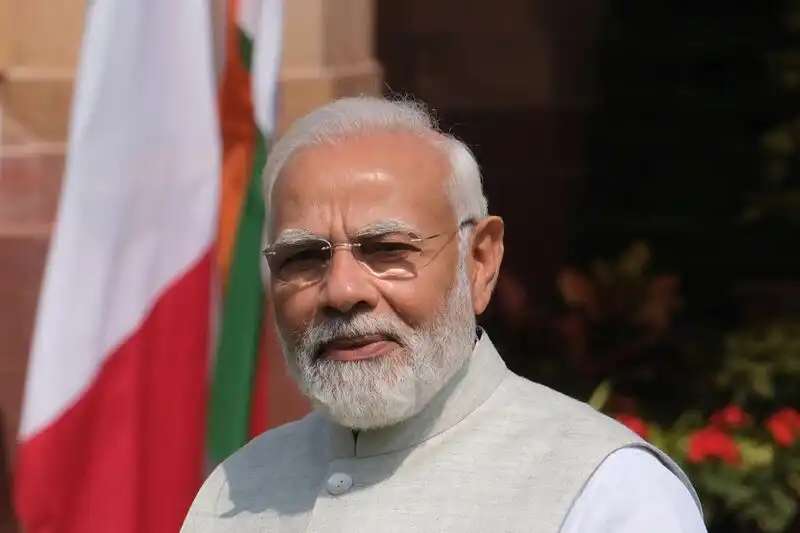


Indian Prime Minister Narendra Modi has arrived in the US for his first official state visit since taking office in 2014. With India's geopolitical standing stronger than ever, Modi is seeking to become a key partner for American tech ambitions. The highlight of the trip will be Modi's address to the US Congress, making him the first Indian prime minister to speak in front of the legislature twice. As well as meeting President Joe Biden, he will also be catching up with private-sector leaders such as Tesla's Elon Musk.
In terms of politics, India offers a diplomatic and military counterbalance to China's power in the region, at a time when the US is distancing itself from its biggest trading partner and the world's manufacturing powerhouse. Both India and the US are viewing China as a threat, with the Biden administration expanding Trump-era export curbs to China and Modi's government banning several hundred Chinese apps after a border clash that resulted in the deaths of 20 Indian soldiers in 2020.
The calls for removing regulatory constraints to allow for more business opportunities, especially in the tech space, will be prominent in the discussions between the two leaders. With the Biden administration looking to prevent China from accessing advanced chips and other technology, India and the US are exploring ways to expand semiconductor manufacturing in India. In the first quarter alone, US imports of chips from India increased by over 38 times. Apple has tripled iPhone production in India over the past fiscal year as it seeks to reduce its reliance on Beijing, and Micron Technology, which is currently under investigation in China, is expected to receive government approval for a $1bn semiconductor plant.
This partnership is also extending to defense. During Modi's visit, General Electric and Hindustan Aeronautics are expected to sign an agreement to produce engines for India's fighter jets. It's a significant step as the US is careful about sharing military technology with other countries. The deal will create a flexible licensing agreement that allows for the transfer of technology.
Despite India's high import tariffs on many sectors, US national and business leaders have highly praised the country. To attract more advanced manufacturing within its borders, India has implemented import duties on smartphones, alongside subsidies designed to encourage assemblers such as Hon Hai Precision Industry and Wistron to set up factories locally. This strategy has paid off, with Hon Hai planning a $700 million plant in India, and Samsung also looking to expand production.
Overall, India is quickly becoming a major player in the tech industry, and Modi's visit to the US is set to strengthen that position. As Rajeev Chandrasekhar, a minister who speaks on behalf of the government's tech policy team, said, "India as a consumer of technology is now being replaced by an India which is at the table, wanting to frame the standards along with like-minded nations for the future of technology."