


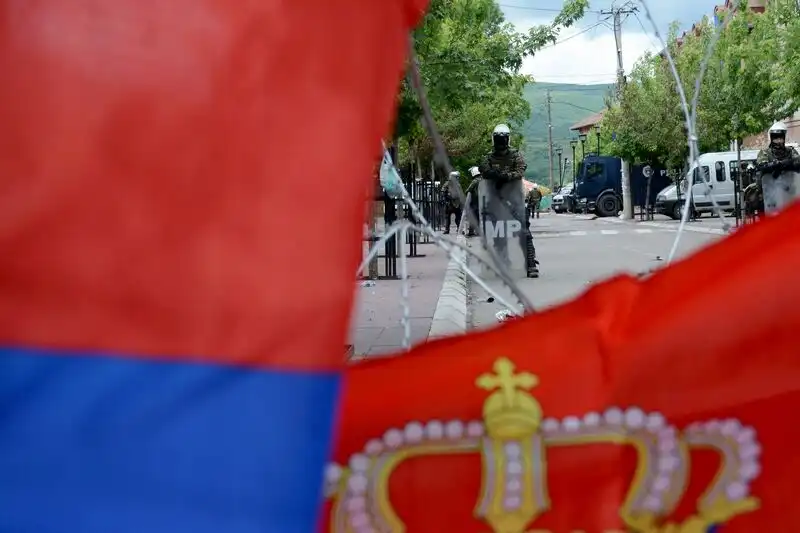


Serbia's top general has warned of potential armed intervention in Kosovo and has called on NATO troops stationed in the region to protect the Serbian minority from the ethnic Albanian majority. General Milan Mojsilovic, the Serbian army chief of staff, stated in an address on Serbian state television that ethnic Serbs "are exposed to a pogrom" by the government of Kosovo Prime Minister Albin Kurti and that "this terror cannot be borne any longer."
General Mojsilovic went on to say that he had asked the commander of the North Atlantic Treaty Organization-led peacekeeping force stationed in Kosovo, KFOR, to take "urgent measures to protect Serbian people." He also warned that if necessary, Serbia's army is ready to act in accordance with the Serbian constitution if it receives an order from President Aleksandar Vucic. However, he did not elaborate on what specific military action Serbia is preparing for.
In recent weeks, tension between Serbia and Kosovo has escalated, as Kosovo police arrested a Serb suspected of attacking KFOR soldiers in May, while Serbian forces detained three Kosovo policemen of ethnic Albanian origin. NATO subsequently deployed 700 more troops to Kosovo and put an additional battalion on higher readiness after the worst clashes in the region in a decade.
The European Union has called this recent escalation "dangerous," and EU foreign policy chief Josep Borrell met separately with Vucic and Kurti in Brussels. However, there has been no apparent progress in easing tensions. The NATO-led force in Kosovo, with a stepped-up troop strength of about 4,500, is led by Italian Major General Angelo Ristuccia. The force was deployed to Kosovo in 1999 to force Belgrade to withdraw its forces, which opened the way for Kosovo to declare statehood in 2008, which Serbia has not recognized.
In conclusion, the situation in Kosovo remains tense, and the potential for military action by Serbia could trigger a confrontation with NATO troops stationed in the region. The international community must work towards finding a peaceful resolution to the conflict, to prevent a further escalation of violence in the region.