


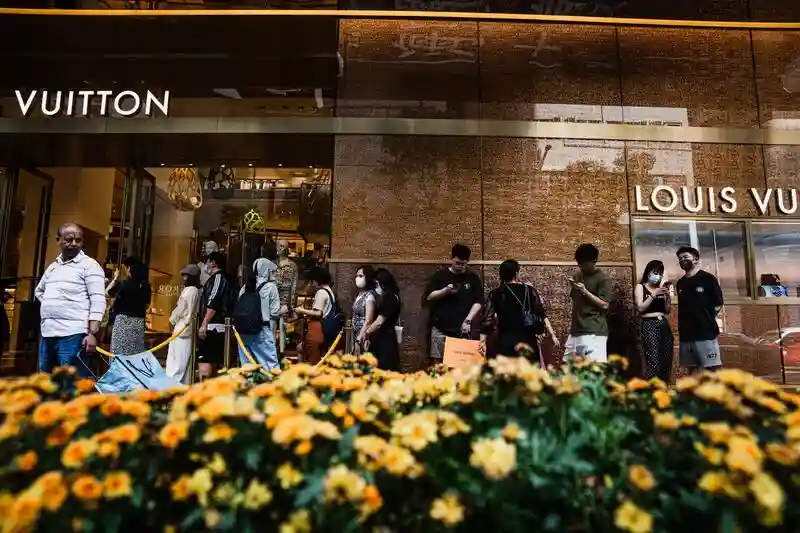


More than 1,200 ESG funds have shown a strong interest in LVMH Moet Hennessy Louis Vuitton SE, the world's biggest producer of luxury goods, according to data compiled. These funds, which focus on promoting environmental, social, and good governance principles, have amassed a combined stake in LVMH worth over $17 billion. This puts LVMH ahead of more traditional green companies like Vestas Wind Systems A/S and Tesla Inc. in terms of popularity among ESG investors.
One of the reasons for LVMH's attractiveness to ESG funds is its strong performance in the market, with a value gain of 195% since the early days of the pandemic. This has helped ESG funds weather a challenging year, which saw rising inflation, interest rates, an energy crisis, and a slump in technology stocks.
Credit Agricole SA has the largest exposure to LVMH through its ESG funds, with an investment of approximately $1.7 billion. Fabio Di Giansante, head of large-cap European equities at Amundi (owned by Credit Agricole), acknowledges that LVMH is ahead of its peers in terms of environmental considerations, but admits that there is room for improvement in the social aspect.
Some critics argue that LVMH's inclusion in ESG funds is paradoxical because the company has yet to align its revenues with the United Nations' Sustainable Development Goals (SDGs). However, LVMH's latest social and environmental responsibility report states that the company supports all 17 SDGs. LVMH has also been included in various sustainable indexes, such as S&P Global ESG and Moody's ESG.
Luxury stocks, including LVMH, have become investor favorites due to their defensive growth profile and relatively reasonable valuations. ESG funds in Europe have returned an average of 10% this year, outperforming the broader market. Luxury brands like LVMH offer the appeal of exclusivity and quality, which resonates with affluent consumers, particularly in China, where a growing wealthy class seeks to express its status through luxury products.
While luxury goods may accentuate social inequalities, they often score well in terms of environmental impact and labor practices. Luxury companies tend to produce smaller batches of goods compared to fast fashion brands, resulting in a smaller environmental footprint. Additionally, their production and sourcing are primarily done in Europe, where strict labor laws are in place.
Overall, the attraction of LVMH for ESG funds stems from its strong market performance, potential for sustainable improvements in environmental and social areas, and its ability to navigate turbulent market conditions.