


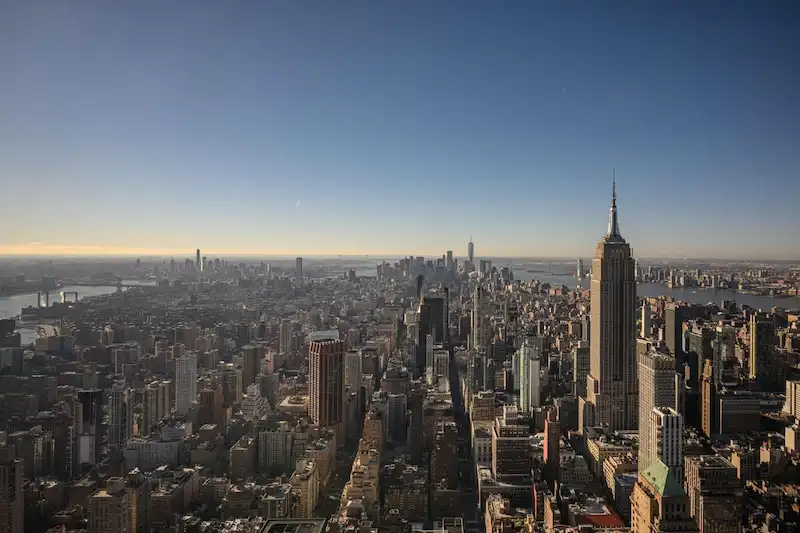


Air quality across major cities along the Interstate 95 corridor, including New York City and Washington, has been deemed unhealthy for sensitive groups. According to the Environmental Protection Agency's AirNow.gov, the air quality index in Manhattan reached 142, just below the threshold of 151 where it would be considered unhealthy for all. The levels in Washington and Philadelphia have also reached concerning levels, with indexes of 138 and 122 respectively. However, the situation is even worse in Pittsburgh and across the Midwest, where the air quality is already categorized as unhealthy.
Experts believe that while the smoke won't be as overpowering as the one that descended from Quebec in June, which turned New York's skies an ominous orange, it is still a cause for concern. Forecasters at the US Weather Prediction Center suggest that the smoke may linger in the Northeast until Tuesday. Currently, there are air quality alerts posted in 18 states, including New York, Pennsylvania, Massachusetts, and Illinois, as well as several Canadian provinces.
In Canada alone, there are currently 883 active fires, of which 580 are raging out of control, as reported by the Canadian Interagency Forest Fire Centre. Since the beginning of the year, these fires have burned an astounding 10 million hectares (24.7 million acres).
Efforts are being made to tackle this alarming situation, but the widespread fires and their resulting smoke have created a significant challenge. The adverse air quality conditions pose a threat to individuals with respiratory issues, the elderly, and young children, who are particularly sensitive to the hazardous effects of poor air quality.
It is crucial for residents in these affected areas to take necessary precautions such as avoiding outdoor activities and keeping windows closed to minimize exposure to the harmful smoke. Additionally, individuals with pre-existing health conditions should consult their healthcare providers for specific recommendations.
The current situation serves as a reminder of the environmental impact of such extensive wildfires and the importance of taking measures to address climate change and prevent further exacerbation of these hazardous conditions.