


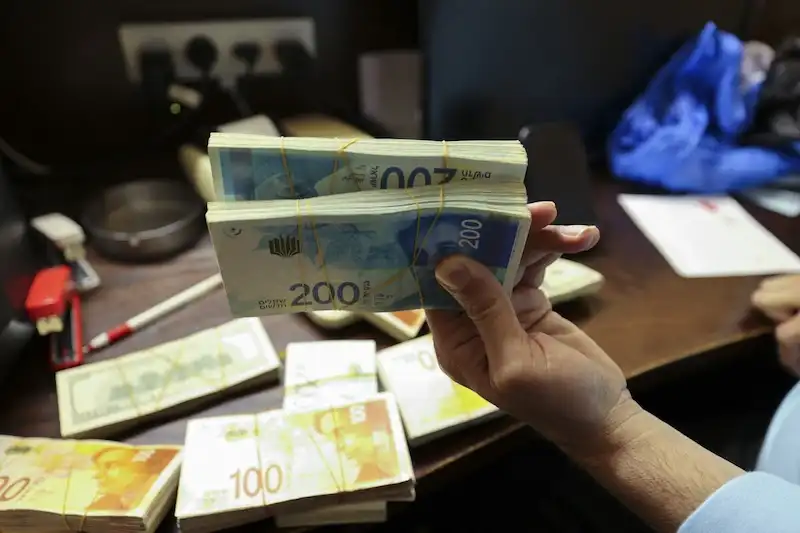


The Israeli shekel experienced significant volatility on Monday, swinging from being the world's top performer to the biggest loser as investors grappled with rising political tensions in the country. The shekel weakened for a third consecutive day, dropping 0.7% against the dollar, after a particularly tumultuous trading session. Initially, the shekel strengthened over 1% before sharply reversing course and falling as much as 1.5%. Despite this recent decline, some analysts believe that the shekel's appeal may not be significantly damaged in the long term due to its real returns.
Geoffrey Yu, a currency and macro strategist at BNY Mellon in London, remains optimistic about the shekel's outlook, stating, "When the dust settles we still expect the shekel to strengthen." He points to favorable real yields as a key supportive factor for the shekel. Additionally, Yu believes that as the carry trade, a popular emerging-market transaction, unwinds, the shekel, as a funding currency, should benefit.
Although the Israeli parliament's approval of a bill reducing the power of judges to overrule government decisions has been met with criticism and widespread protests across the country, Deutsche Bank analysts argue that the shekel's risk premium remains substantial. They recommend going long on the currency and suggest that further weakness in the foreign exchange market could potentially be met with intervention by the Bank of Israel.
Jerome Leibovici, FX and rates strategist at BNP Paribas, notes that positioning data indicates offshore investors have been short on the shekel. Despite the current political developments, Leibovici expects the shekel to appreciate in the long run as its risk premium declines. He believes that as this happens, the shekel's correlation with US technology stocks, rather than domestic political factors, may be revived.
Overall, while the shekel has experienced turbulence in recent days, opinions remain divided on its long-term outlook. While some analysts believe that the shekel's attractiveness may be affected by political tensions, others point to supportive factors such as real yields and the potential for intervention by the central bank.