


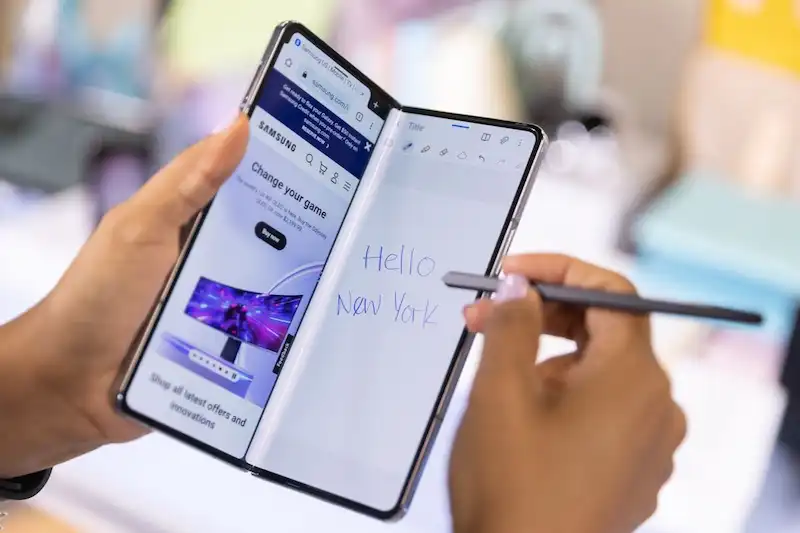


Samsung Electronics has unveiled its latest line of foldable smartphones in an effort to revitalize the market and compete with upcoming products from rival Apple Inc. The company introduced the Galaxy Z Flip 5 and Galaxy Z Fold 5, the fifth generation of its foldable smartphones, at its recent Unpacked product event. The Galaxy Z Flip 5 features a 6.7-inch smartphone that folds down into a square shape, with an improved hinge and a larger external display. The Galaxy Z Fold 5, the flagship device in the range, also benefits from a thinner and lighter design, thanks to the enhanced hinge.
Samsung's foldable smartphones come at a time when the demand for low-to-mid end smartphones has been weak, making foldable devices a profitable and promising segment for the company. These new models are built around Qualcomm's Snapdragon processors and offer added enhancements exclusively for Samsung's Galaxy line. Samsung's partnership with Qualcomm has helped improve the performance of its devices and pushed out their in-house Exynos processors.
The latest Samsung foldables arrive ahead of Apple's highly anticipated product launch, which is expected to include major upgrades to the iPhone 15 and new Apple Watches. Apple is also transitioning to more advanced 3nm processors and plans to introduce OLED displays to its iPad Pro tablets next year. Samsung's Galaxy Z Fold 5, while offering improvements in low-light photography and a slimmer S-Pen stylus, faces challenges in a tough economic environment, as consumers are more cautious with their spending.
While Samsung pioneered the foldables category in 2019, it now faces increasing competition from other players in the market, including Google, Xiaomi, Huawei, and Oppo. Google's Pixel Fold, for instance, matches Samsung's pricing and is available in select countries, putting pressure on Samsung's market share. However, Samsung maintains a strong partnership with Google in the Android ecosystem and artificial intelligence.
Foldable smartphones currently hold about 5% of the overall smartphone market, growing from 0.3% four years ago, according to Counterpoint Research. These devices are expected to reach 55 million units annually within the next two years, with Asia being a particularly popular region for their adoption. Chinese vendors are also entering the foldables market, posing a potential challenge to Samsung's dominance.
In addition to the new foldables, Samsung also announced updates to its tablet and smartwatch lineup. The Galaxy Tab S9 tablets have undergone minor changes, with improved water resistance and an OLED display added to the cheapest model. The company also introduced the new Galaxy Watch 6, featuring larger screens, enhanced battery life, faster processors, and new health tracking features such as heart rate and sleep tracking.
Overall, Samsung's latest releases aim to remain competitive in the smartphone and wearable devices market, while building an ecosystem of complementary devices similar to Apple's. With advancements in design and functionality, Samsung hopes to capture the attention of consumers and maintain its position as the world's largest smartphone manufacturer.