


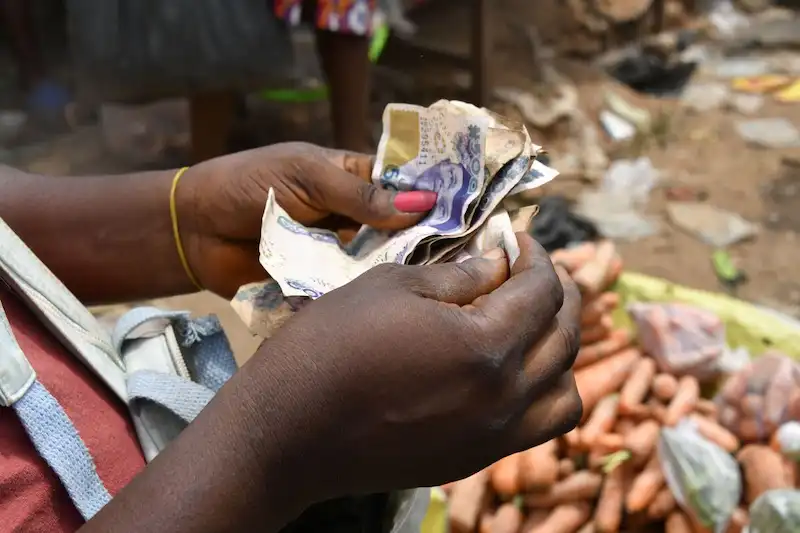


The Nigerian naira could face further depreciation as it weakens to 850 per dollar by the end of the first half of 2024, according to South African lender Absa Group. The prediction is based on the pressure on the country's balance of payments and declining foreign exchange reserves.
Nigeria is likely to struggle in offsetting the pent-up demand for dollars with portfolio inflows, especially in domestic bonds that offer low yields well below the current monetary policy rate of 18.75%. Absa analyst Nikolaus Geromont highlights this concern in the report.
To address the escalating inflation, the Nigerian central bank raised its benchmark rate by 25 basis points, leading to the sale of 255 billion naira ($338 million) of one-year treasury bills at a yield of 12.15%. However, Geromont suggests that domestic bonds would need to attract global investors by pricing in more risk premium.
Despite efforts to boost inflows into the foreign exchange market, Nigeria is still grappling with a backlog of demand, according to Folashodun Shonubi, the acting governor of the central bank. The volatility in the exchange rate is apparent, with the naira fluctuating between 742 and 804 against the dollar since June 15. The central bank recently announced that it would allow the currency to trade freely in the investors and exporters window, intervening only to maintain a "fairly stable level."
Absa notes that the persistent gap between the official and unofficial rates of the naira indicates a substantial backlog of dollar demand. Analysts at Goldman Sachs estimated earlier this year that the unmet dollar demand in the Nigerian foreign exchange market could be as high as $12 billion.
While the central bank aims to promote market efficiency and allow the naira to find its level, Shonubi clarifies that there is no intention to unify rates. However, there is a need for swift action to stabilize prices and safeguard the foreign exchange market liberalization measures already announced, according to Razia Khan, head of research for Africa and the Middle East at Standard Chartered Plc.
Overall, Nigeria faces challenges in meeting the demand for dollars, which may further weaken the naira. Efforts are being made to address the volatility and backlog in the foreign exchange market, but more measures are needed to stabilize the situation and attract global investors.