


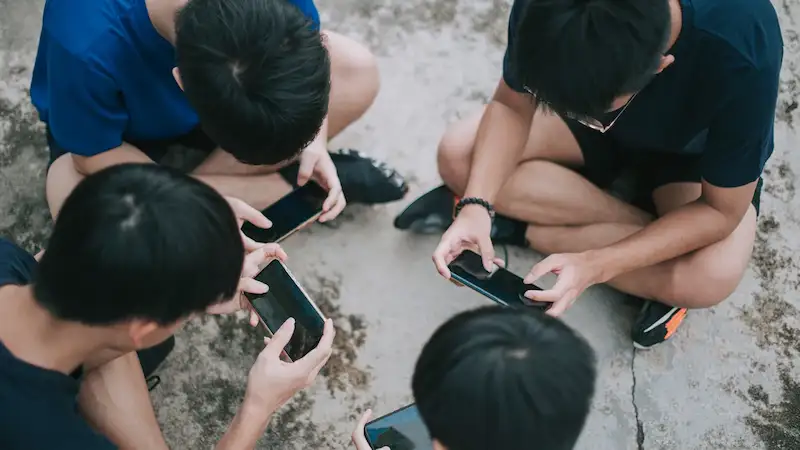


China is proposing new measures to address the issue of internet addiction among children and teenagers. The Cyberspace Administration of China, the country's top internet regulator, has released a proposal that would require all mobile devices, apps, and app stores to have a built-in "minor mode" feature. This feature would limit daily screen time to a maximum of two hours per day, depending on the age group.
The aim of these restrictions is to reduce minors' exposure to "undesirable information" and cultivate "good morality" and "socialist values" among them. If approved, the new rules would expand upon existing measures that have been introduced in recent years to limit screen time for kids.
According to the draft rules, children and teenagers using devices in minor mode would have their online applications automatically closed when their respective time limits are reached. They would also be provided with "age-based content." Additionally, individuals under 18 would not be able to access their screens between 10 p.m. and 6 a.m. while using minor mode.
The proposed restrictions on screen time vary according to age group. Children under eight years old would be allowed to use their phones for only 40 minutes a day, while those between eight and 16 would have a maximum of one hour of screen time. Teenagers between 16 and 18 would be permitted two hours of screen time. All age groups would receive a reminder to take a break after using their devices for more than 30 minutes.
The draft rules also emphasize the role of mobile internet service providers in creating content that promotes "core socialist values" and fosters a sense of national community. However, parents would still have the ability to override the time restrictions, and certain educational and emergency services would be exempt from the limits.
These proposed measures have garnered tentative support from parents who see them as a means of protecting their children's vision and promoting healthier screen habits. Myopia, or nearsightedness, has become a major concern in China, with some experts linking it to excess screen time and lack of exposure to sunlight.
The effectiveness of these proposed measures may rely on parental cooperation and enforcement. One parent noted that children sometimes use their parents' accounts to access online content, which could pose challenges to the restrictions. Nevertheless, the regulation could be helpful in supervising children's screen time and limiting excessive usage.
The new measures could present challenges for tech companies, as they would likely be responsible for enforcing the regulations. The announcement of these rules caused a decline in the Hong Kong-listed shares of top Chinese internet firms like Tencent, Bilibili, Kuaishou, and Weibo, though some have seen their stock prices stabilize since then.
In recent years, tech companies in China have taken steps to introduce more parental controls and comply with the government's push for increased oversight. For example, Douyin, the Chinese version of TikTok, introduced a "teenage mode" that limits the daily usage of children under 14 to 40 minutes. Kuaishou, another popular video app, has a similar option.
Previous efforts to address internet addiction in China have involved requiring internet users to register with their real names and verifying users' identities. It remains to be seen how these proposed measures will be implemented and their impact on reducing screen time among minors.