


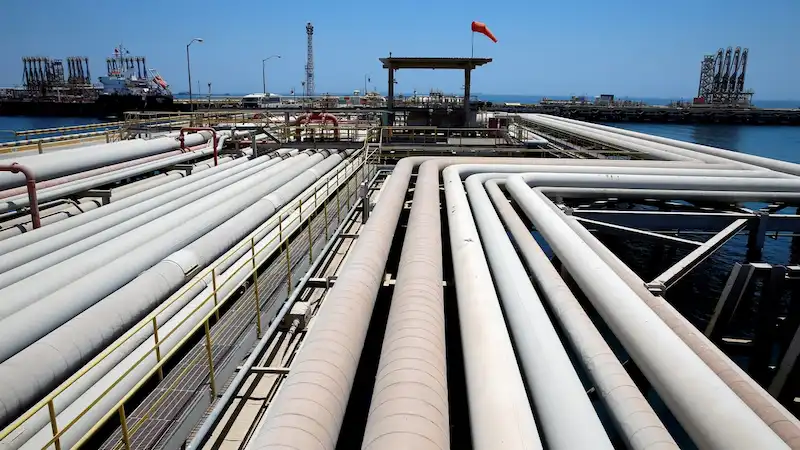


Saudi Arabia has made the decision to extend its oil production cuts for at least another month, despite the fact that this move may lead to higher gasoline and energy prices. The news was confirmed by an official source from the Saudi Ministry of Energy, who stated that the kingdom will continue to voluntarily reduce its output by one million barrels per day throughout September. There is also the possibility that the cut could be extended even further, as the goal is to support the stability and balance of oil markets.
This is the second time that Saudi Arabia has extended its production cut, which was initially announced in June after a meeting between OPEC, Russia, and other smaller producers. At the same time, Russia has also announced its plans to reduce oil exports by 300,000 barrels per day in September.
The oil market had already factored in these moves by Saudi Arabia and Russia, which has resulted in an upward trend in oil prices in recent weeks. US oil prices rose by 1.6% on Thursday, reaching $81.05 a barrel, while Brent crude, the global benchmark, jumped by 1.5% to $84.50 a barrel.
Experts suggest that although these announcements support the price increases, they are unlikely to drive prices significantly higher on their own. Rick Joswick, head of near-term oil research and analysis at S&P Global Commodity, stated that the extended supply restraint from Saudi Arabia and Russia contributes to the recent price increases.
This decision by Saudi Arabia and Russia comes at a time when oil prices have already rebounded, resulting in higher pump prices for US consumers, reaching their highest levels in nine months. However, this situation goes against the efforts of the US to control inflation. Robert Yawger, vice president of energy futures at Mizuho Securities, emphasized that Russia and Saudi Arabia rely on higher oil prices to support their budgets.
The White House has not yet commented on the matter. The national average for regular gasoline has reached $3.82 a gallon, which is the highest level since late October 2022 and represents a 28-cent increase over the past month. The spike in gasoline prices can be attributed to OPEC's supply cuts and the impact of extreme heat on refineries. There is concern that if gasoline prices continue to rise, it may eventually lead to a decrease in demand.
Diesel, which is a crucial fuel for trucks, trains, and boats, is also experiencing significant price hikes. The International Monetary Fund estimates that Saudi Arabia needs Brent crude to trade at around $81 a barrel in order to balance its budget. The country slipped into a budget deficit this year after reporting a surplus in 2022 for the first time in almost a decade.
Russia, on the other hand, is aiming to increase revenues to support its war effort in Ukraine. The International Energy Agency reported that Russia's revenue from oil exports decreased by $1.5 billion in June, nearly half of the level compared to the previous year.