


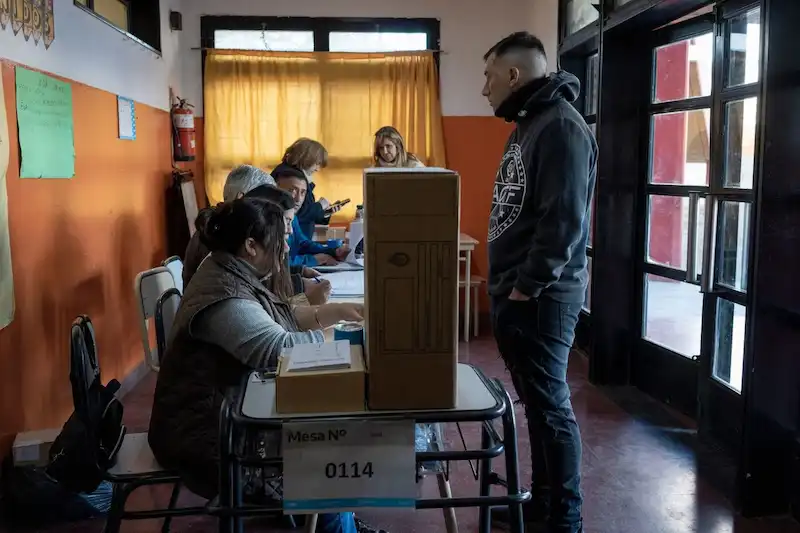


Argentines are heading to the polls on Sunday for a critical primary election that will shape the country's political landscape ahead of the general vote in October. This primary election is seen as a key indicator of the potential change of government, and the main focus will be on the performance of the business-friendly opposition party against the incumbent Peronist bloc, as well as the support for a third-party candidate.
Economy Minister Sergio Massa and his ruling government coalition face an uphill battle to win reelection this year, given the high inflation and anticipated recession. Massa is up against the main opposition bloc, which has two candidates vying for the nomination – Buenos Aires Mayor Horacio Rodriguez Larreta and former security minister Patricia Bullrich. The winner will become the sole contender for the October vote.
Investors will closely watch the total number of votes received by Larreta and Bullrich combined compared to Massa's coalition and outsider candidate Javier Milei. While Massa could receive the highest number of individual votes, the market's attention is on the difference between the two coalitions.
Uncertainty prevails due to historical inaccuracies in polling and voter apathy. Four years ago, a similar primary election resulted in an unforeseen defeat for the ruling pro-business opposition party. This triggered a significant decline in Argentine assets, including a 48% drop in the S&P Merval stock index, the second-largest one-day rout among all tracked stock exchanges since 1950.
Polls are set to close at 6 p.m. local time on Sunday, but if long lines persist, voting may be extended by an hour or two. The results will start to come in after 9 p.m., with Buenos Aires province being the last to report results – a highly politically significant region due to its population size.
A substantial victory for the opposition bloc, with estimated performance between 35% to 40%, would be perceived positively by investors and could strengthen Argentina's sovereign bonds. However, if Milei or Massa perform better than expected and narrow the gap to within 5 percentage points of the opposition, market uncertainty could ensue on Monday.
Recent incidents, including the violent murders of an 11-year-old schoolgirl and another individual over a mobile phone, may influence voter sentiment. These incidents occurred in the outskirts of Buenos Aires, which is traditionally a stronghold for the Peronist party. As a result, some campaign rallies were canceled leading up to Sunday's vote.