


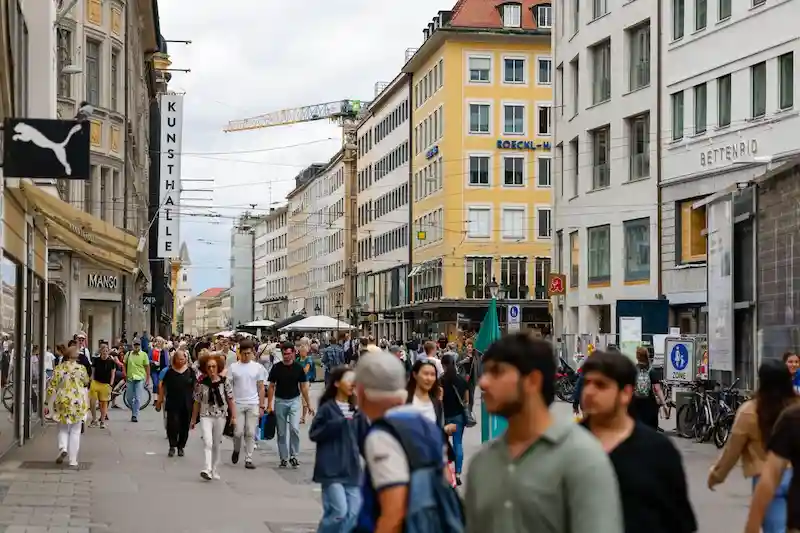


Euro area business activity has experienced a significant contraction this month, with Germany facing the sharpest decline since the pandemic began in May 2020. This downturn in activity has been reflected in France, where output has dropped for the third consecutive month, while the rest of the region has experienced a more moderate contraction. Additionally, Sweden's economic prospects have dimmed, and the UK has seen a decline in retail sales, indicating that consumers are exercising greater caution.
Surprisingly, the central bank in Turkey, led by Governor Hafize Gaye Erkan, has implemented the steepest interest-rate increase since 2018. This unexpected move has sparked a rally in the Turkish lira and banking shares. The intensifying contraction of private-sector activity in the euro area has led investors to speculate that the European Central Bank may halt its campaign of interest-rate hikes next month. Both the industrial sector and the services sector in the region's top two economies have entered a downturn.
While Sweden's government remains optimistic and dismisses the possibility of a contraction next year, they have projected only meager growth for the economy. This is due to consumers facing increased pressure from higher costs. In the UK, retail sales have fallen more than anticipated in July, partly due to cool and rainy weather which discouraged people from visiting shops. However, the decline in property prices has led to improved housing affordability, providing some hope for young buyers who have struggled with high valuations.
Residential real estate in the US has been affected by a recent spike in borrowing costs, with mortgage applications for home purchases reaching an almost three-decade low. The contract rate on a 30-year fixed mortgage has increased to 7.31%, the highest since late 2000. Additionally, it is now believed that US job growth in the year through March was not as robust as initially reported, although this does not significantly alter the overall picture of a strong labor market that is gradually cooling.
US politicians are increasingly inclined to stimulate the economy with government spending, resulting in higher borrowing costs that are expected to persist even after the inflation emergency subsides. The country is facing unprecedented budget deficits, which is causing uneasiness among investors. South Korea has also been affected by lackluster global trade, with early exports continuing to decline in August. China has escalated tensions with Japan by announcing a halt on all seafood imports due to Japan's release of treated wastewater from the Fukushima nuclear power plant.
Turkey's central bank surprised markets with a significant interest-rate increase, leading to a rally in the country's assets. This has raised hopes that policies causing foreign investors to flee the Turkish economy may be unwound. The Turkish lira, one of the worst-performing currencies in the world, experienced its largest surge in almost two years following the announcement. Climate change is also impacting global trade, with the shrinking water levels in the Panama Canal forcing ships to part-load in order to navigate the vital waterway. This could potentially result in delays in restocking inventories before Christmas, according to Container xChange, a container logistics platform. Finally, Iceland's central bank has raised interest rates higher than expected, while Turkey, Zambia, Korea, Sri Lanka, and Indonesia have either raised rates or kept them unchanged.