


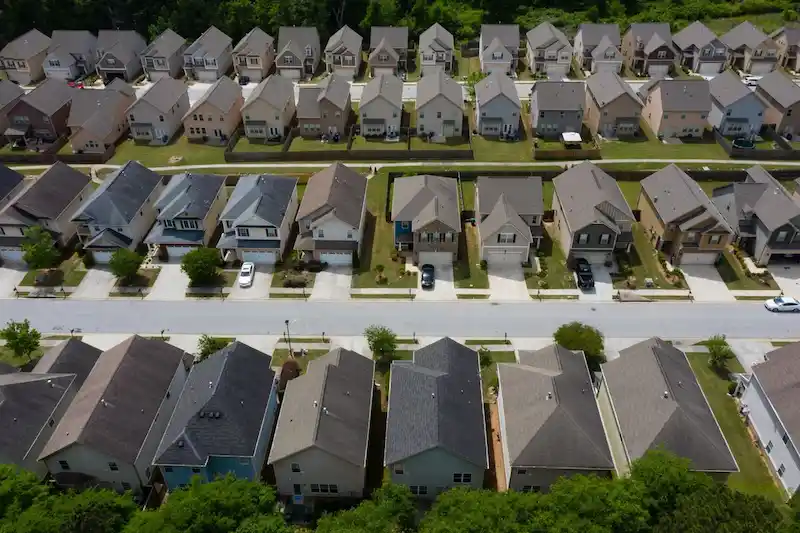


The recent surge in US mortgage rates, surpassing 7%, is causing even greater uncertainty in the housing market. Homebuyers, who have become accustomed to historically low interest rates, are now feeling the impact of higher borrowing costs. This has led to a cooling of deals, as loan applications for home purchases have fallen to their lowest level in almost three decades. Buyers are rushing to lock in rates now to avoid potentially even higher rates in the future. However, this freeze in the market is causing a decrease in inventory and an unexpected increase in prices.
The combination of falling sales and rising prices has created a unique situation in the housing market. Typically, a downturn in the market results in a decrease in prices, but the tight inventory is causing prices to climb. This leaves potential buyers in a tough position, fighting for limited options while also grappling with the affordability factor due to rising mortgage costs.
The rising mortgage rates have caught many buyers off guard. Ryan Woods, a homeowner in Maryland, is torn between moving to a larger home and renting out his current one. However, he is unsure whether to buy a new property now or wait until after the birth of his third child. The uncertain trajectory of the interest rates makes it a gamble for buyers like Woods, who are unsure if rates will go up or down in the future.
Industry professionals are also feeling the impact of rising rates. Mortgage loan officers are facing challenges as potential buyers no longer qualify for loans they were pre-approved for in the past. The rising home prices further complicate matters, making it difficult for buyers to afford their desired properties. The strategy of refinancing later to take advantage of lower rates is proving risky, as borrowers find themselves struggling with higher monthly payments.
The economic strength of the US has contributed to the rise in mortgage rates. Despite predictions of an impending recession, the job market has remained strong, causing interest rates to rise. This uncertainty surrounding rates has left buyers and industry professionals wondering how high rates can go. Some experts predict rates may reach 8% in the coming months, while others believe they will fall back towards 6.5%. Regardless, historically low borrowing costs are not expected to return anytime soon, as the Federal Reserve has signaled its intention to keep rates high.
The combination of high mortgage rates and limited inventory has created a challenging environment for buyers. Many buyers are stretching their debt-to-income ratios to the maximum, leading to potential financial strain. The decline in new listings is expected to worsen if rates continue to rise, further limiting options for buyers.
Despite the challenges, the market is still active in some areas. Homebuilders, especially those in markets with new construction, are benefiting from the limited supply of existing homes. Median home prices in the US have started climbing again after falling for several months. Even in previously booming markets such as Phoenix and Austin, price drops have flattened or stabilized.
While some buyers are staying put due to the uncertain market, there is still a need for new home purchases due to life events such as births, deaths, and divorces. Downsizers are also in the market, armed with cash from recent home sales. However, finding available properties has become the biggest obstacle for buyers in many parts of the country.
In conclusion, the surge in mortgage rates to 7% has added a new layer of uncertainty to the US housing market. Buyers are facing challenges in finding affordable properties due to limited inventory and rising prices. The current freeze in the market is leaving buyers, sellers, and industry professionals in a state of limbo. The trajectory of interest rates remains uncertain, creating further unpredictability in the market.