


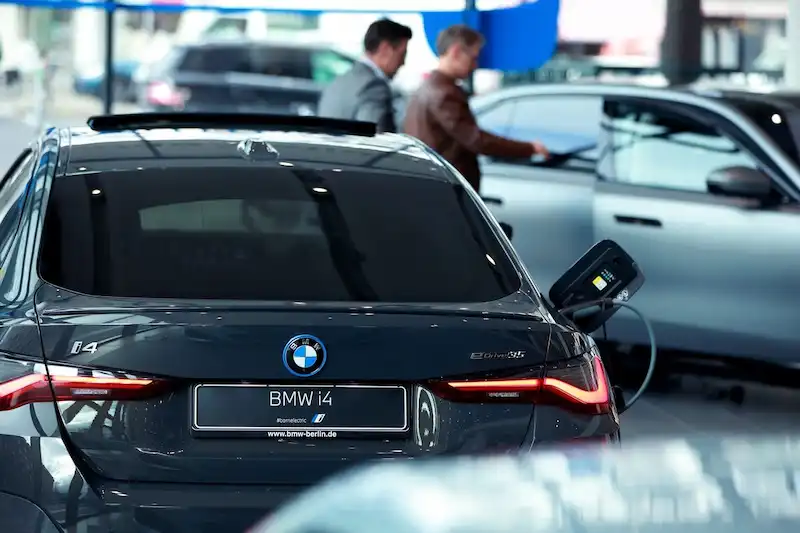


Car sales in Europe continue to soar, with July marking the 12th consecutive month of growth. According to the European Automobile Manufacturers' Association, new-car registrations increased by a significant 17% to reach 1.02 million vehicles. This surge in sales can be attributed to the rising demand for electric vehicles (EVs) and the improved availability of parts.
One notable trend in the European car market is the increasing popularity of EVs. In July, sales of battery-electric cars witnessed a remarkable surge of 62%. This demonstrates a clear shift in consumer preferences towards more sustainable and environmentally-friendly transportation options. On the other hand, sales of diesel models experienced a decline of 9%, indicating the gradual decline of traditional fuel-powered vehicles.
Several markets within Europe witnessed double-digit sales growth. Germany, France, and Spain were among the countries that saw a substantial increase in car sales. Notably, Germany registered the highest number of fully electric cars, with 48,682 units sold in July, marking a 69% increase compared to the previous year.
The recent growth in European car sales can be attributed to the efforts made by automakers to overcome the challenges posed by supply issues, particularly the shortage of semiconductors and critical components. With these supply constraints easing, the industry outlook remains uncertain due to potential factors such as higher living costs and borrowing rates, which could impact consumer buying behavior in the future.
While Tesla's Model Y dominated the European market in the first half of the year, local manufacturers are gearing up to compete. Carmakers such as Volkswagen, Stellantis, and BMW are set to introduce new electric models in the coming months, many of which will be showcased at the upcoming IAA car show in Munich.
The United Kingdom also experienced a significant surge in car sales, with a remarkable 88% increase in July. This can be attributed to more stringent emissions rules in London, which have encouraged consumers to opt for electric vehicles. France ranked third in terms of electric vehicle sales, with 16,867 units delivered.
In terms of market performance, Volkswagen emerged as the leading passenger car manufacturer in Europe, with 280,294 registrations across all fuel types. This represents a 19% increase compared to the previous year. Meanwhile, Stellantis witnessed a slight dip of 3.3% in sales, with 160,251 vehicles sold.
Overall, the European car market continues to show resilience and growth, driven by the increasing demand for electric vehicles and the industry's ability to overcome supply constraints. With new electric models hitting the market and an ongoing focus on sustainability, the future of the European automotive industry looks promising.