


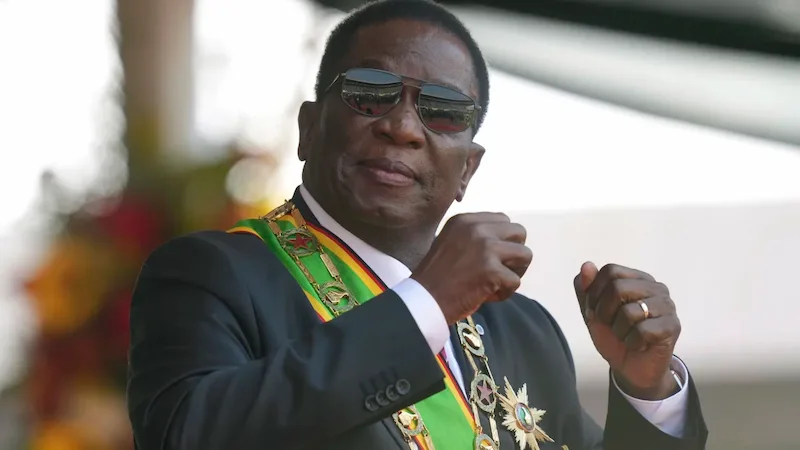


Zimbabwe's President Emmerson Mnangagwa was inaugurated for his second five-year term on Monday, following a heavily disputed presidential vote. The 80-year-old leader, who secured an absolute majority in the election, was sworn in during a vibrant ceremony attended by thousands of Zimbabweans and regional leaders.
Mnangagwa's re-election came after he received over 2 million votes, accounting for 52.6% of the total ballots cast. His main rival, Nelson Chamisa of the Citizens Coalition for Change (CCC) party, garnered 44% of the votes, according to the Zimbabwe Electoral Commission. However, Chamisa and his party rejected the election results, alleging electoral fraud, and called for fresh elections.
The hotly contested poll faced criticism from both local and international observers who raised concerns about a lack of adherence to electoral standards. A preliminary report by the European Union Election Observation Mission highlighted the curtailment of fundamental freedoms during the election process, along with acts of violence and intimidation that created a climate of fear.
The controversy surrounding the elections deepened with the arrests of 41 election monitors by Zimbabwe's police. They were accused of coordinating the release of results and their detention followed the release of a report by the Zimbabwe NGO Forum, which documented irregularities on polling day, according to Amnesty International.
Despite the concerns, the opposition CCC party stated that it would not challenge Mnangagwa's victory in court because it lacks confidence in the country's legal system. Promise Mkwananzi, spokesperson for the party, stated that seeking justice through a compromised court would be pointless. Instead, the opposition plans to challenge the results politically and diplomatically, calling for fresh, free, and fair elections.
The August 23rd elections marked the second election held in Zimbabwe since the military deposed long-time authoritarian leader Robert Mugabe in 2017. Mnangagwa, who was referred to as "The Crocodile," assumed power following the coup that removed Mugabe from office. The reelection of Mnangagwa and the controversies surrounding it have raised questions about the future of democracy in Zimbabwe and the integrity of its electoral processes.