


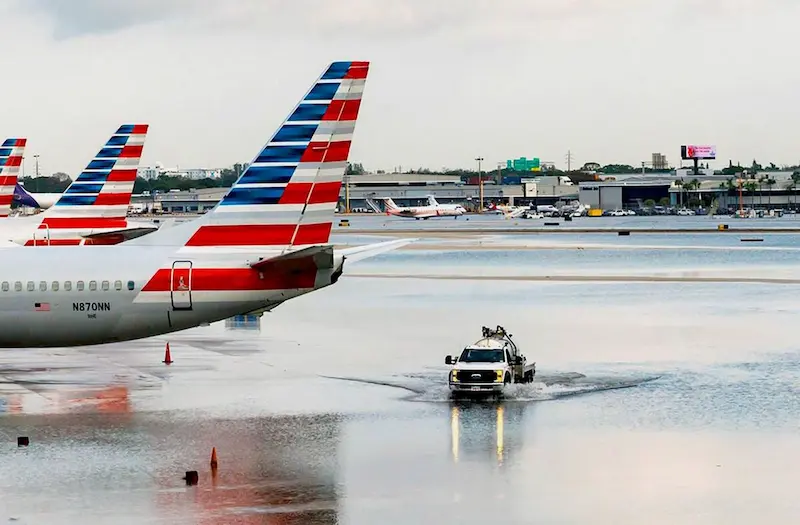


Airports worldwide are taking proactive measures to combat the effects of climate change on their operations. As extreme weather events become more frequent and temperatures continue to rise, airports are investing in infrastructure upgrades to protect sensitive equipment, reinforce runways, and enhance cooling systems. These adaptations are necessary to ensure the smooth functioning of airports and maintain passenger comfort.
In New York, the redevelopment of John F. Kennedy International Airport includes measures to mitigate the impact of storm surges and coastal flooding. The Port Authority of New York and New Jersey is relocating electrical equipment to rooftops and planning to elevate or relocate buildings to less flood-prone areas. These steps have been informed by lessons learned from Hurricane Sandy in 2012, which caused severe damage to the airport.
In Alaska, where permafrost is thawing due to rising temperatures, runways and other vital infrastructure are being fortified. Insulation is being installed in the ground to protect permafrost, and embankment slopes are being flattened to stabilize runways. These precautionary measures help prevent damage caused by thawing permafrost, which can compromise the safety and functionality of airports.
Europe is also taking steps to adapt to climate change in its airports. Amsterdam's Schiphol Airport, for example, has elevated and sloped its runways to improve water drainage and is implementing a rainfall disposal system to manage increasing precipitation. Additionally, the airport is creating shaded areas, improving ventilation, and designing heat-resistant surfaces to combat rising temperatures.
Beyond the physical infrastructure, airports are also making adjustments to cope with the impact of climate change on air travel itself. Higher temperatures can reduce air density, resulting in reduced lift and engine power for aircraft. Consequently, longer runways may be required for takeoff or airlines may have to reduce seating capacity to minimize weight. These challenges highlight the urgent need for the aviation industry to adapt and become more resilient in the face of climate change.
While airports are taking necessary precautions, the costs of climate-related upgrades can be significant. Maintenance and daily inspections of runways already incur substantial expenses, which are expected to increase with climate change. Major repairs or resurfacing projects can cost hundreds of thousands or even millions of dollars. However, the cost of inaction could be even higher, as airports risk disruptions and compromised operations if they fail to address climate change adequately.
Overall, the aviation industry recognizes the urgency of adapting to climate change. As travel rebounds post-pandemic and extreme weather events become more frequent, airports worldwide are prioritizing the renovation of critical infrastructure to ensure the safety and efficiency of air travel. The time for action is now, as airports must face the challenges of climate change head-on to secure the future of global aviation.