


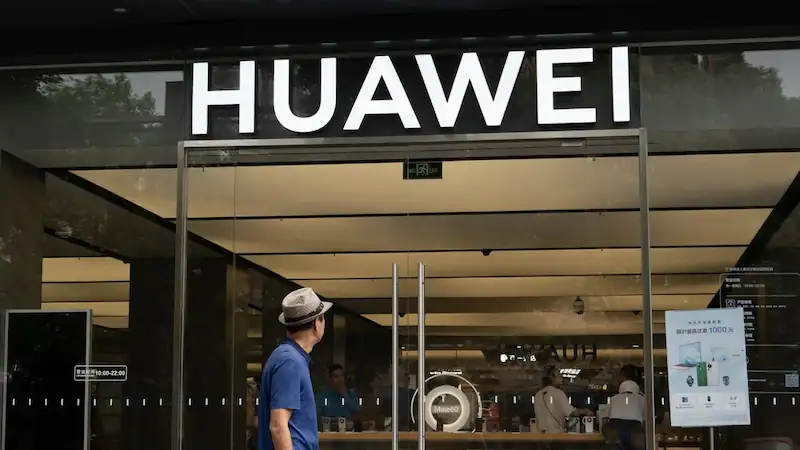


Taiwan has launched an investigation into four local companies to determine whether they violated US sanctions or Taiwanese investment rules by providing services to Chinese firms involved in building chip factories for Huawei. The Ministry of Economic Affairs has initiated an administrative probe into the companies to ascertain if their business activities in China align with the approvals they have received from the ministry. If found guilty, each company could face a maximum fine of 25 million New Taiwan dollars ($777,000).
The investigation will also scrutinize whether the companies, namely Topco Scientific, United Integrated Services, L&K Engineering Co, and Cica-Huntek Chemical Technology, violated any US sanctions. The four companies have denied any wrongdoing and stated that their involvement was limited to tasks like wastewater management, interior decoration, and construction work approved by Taiwan. They emphasized that they did not supply semiconductor materials or equipment.
Huawei, caught in the tech rivalry between the US and China, has faced restrictions on accessing advanced chips and chipmaking technology due to concerns about potential spying for the Chinese government. While Huawei has consistently denied these allegations, Taiwan and other countries have taken steps to limit the company's influence. As Taiwan hosts several major companies like TSMC and Foxconn, which operate within China's supply chains, the government closely monitors their activities to safeguard against the transfer of sensitive technology.
During a parliamentary session, Taiwan's Minister of Economic Affairs, Wang Mei-hua, commented on a Bloomberg report accusing the four companies of assisting Huawei in building chip infrastructure. Wang reportedly stated that the companies provided wastewater and environmental protection equipment to Huawei's factories, which she considered distinct from the critical technologies designated by the Taiwanese government as potentially impacting national security.
Taiwanese firms have long navigated the delicate balance between engaging in China's commercial opportunities and complying with export controls, particularly as Beijing continues to increase military pressure on the island. China asserts sovereignty over Taiwan, considering it a part of its territory, although it has never governed it. The Chinese government has persistently expressed its intention to reunify with Taiwan, even through force if necessary.
Given the significance of cross-strait relations, Taiwan's upcoming presidential election in January places even greater emphasis on these matters. Despite China being Taiwan's largest trading partner, the government remains cautious, ensuring that advanced technology is not produced within China to safeguard its national security interests.