


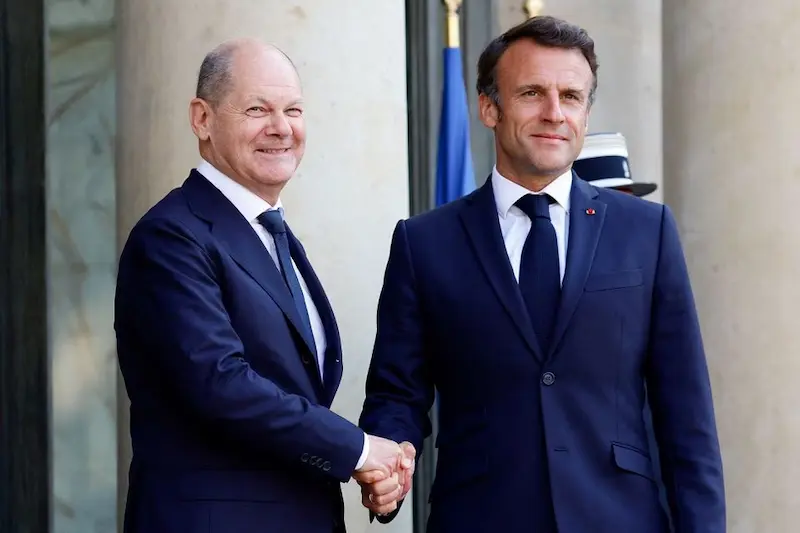


Tensions between France and Germany are hindering decision-making and causing rifts within the European Union (EU). While the recent image of French President Emmanuel Macron and his cabinet enjoying a boat trip with their German counterparts in Hamburg suggests a harmonious Franco-German friendship, the reality is quite different. The two nations are locked in a power struggle over various EU projects, ranging from joint defense programs to nuclear energy and relations with China.
One of the most contentious issues is EU electricity reform, with France accusing Germany of attempting to undermine the competitiveness of its nuclear industry. Germany's decision to phase out nuclear energy following the Fukushima disaster in 2011 has left the country struggling with soaring electricity costs, especially after its access to cheap Russian gas was cut off due to the Ukraine conflict. French officials believe Germany's anti-nuclear policy is extending beyond its borders to potentially harm France's nuclear industry, which produces cheap electricity that could give the country a competitive edge.
The fear in Germany is that France may offer state-backed fixed-price contracts for nuclear power to its national energy champion, EDF, and utilize the revenue generated to support French industries. There is also concern that French companies may be able to lure German companies across the Rhine with cheaper energy prices. These issues are causing a deepening rift between the two countries and have made it challenging to reach a compromise ahead of a crucial EU energy meeting on October 17.
The strained relationship between France and Germany goes beyond technical disagreements and reflects broader differences in economic interests and visions for the future of the EU. French President Macron advocates for Europe's "strategic autonomy," urging the continent not to rely on external powers in sectors that could be leveraged for political gain. In contrast, Germany historically relies on the American military umbrella for security.
Additionally, Germany's belief in "Change through Trade," the idea that trade between nations can prevent conflicts and support democracy, clashes with France's more assertive approach. While Germany has been cautious due to its extensive investments in China, France is willing to accept the growing risk of retaliation from Beijing. These conflicting perspectives were evident during a recent investigation by Brussels into Chinese electric vehicles, which France encouraged while Germany expressed reservations.
The breakdown in communication and trust between France and Germany is not going unnoticed by other European officials. It is expected to complicate the decision-making process on crucial matters such as the future support for Ukraine and other significant EU decisions. The upcoming informal meeting between Macron and German Chancellor Olaf Scholz in Hamburg aims to address these tensions, but analysts remain skeptical about the prospects for a resolution.
Ultimately, the strained Franco-German relations highlight the challenges faced by the EU as it seeks to navigate complex issues and find common ground among member states. As the two largest powers within the EU, the cooperation and alignment of France and Germany are crucial for the success of European projects. However, the current disagreements underscore the need to bridge the gap between different national interests and visions for the future of Europe.