


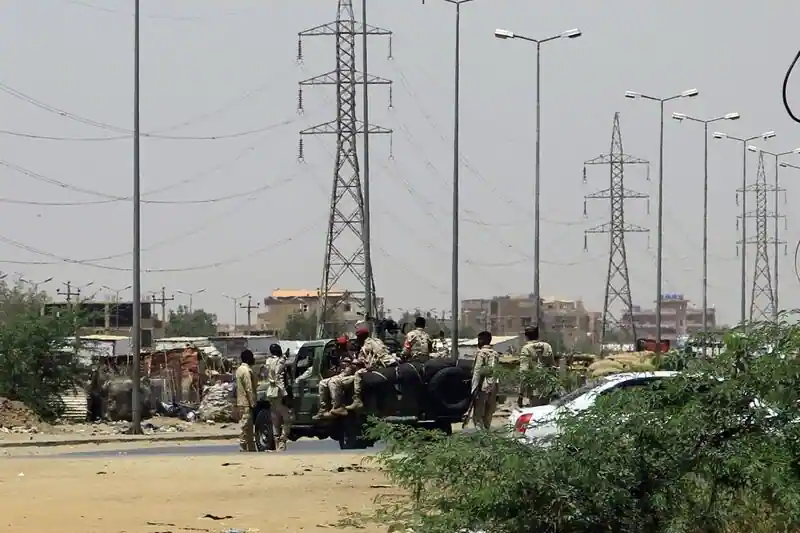


Sudan's capital, Khartoum, has experienced its worst violence in modern history as the country's army and a rival paramilitary group, the Rapid Support Forces (RSF), engaged in fierce clashes. The fighting spread to other cities in Sudan, including Nyala, Fashir and el-Obeid, leading to at least three deaths. The violence erupted due to long-running tensions between the two groups over who retains power. This has thrown into chaos the plans for a power-sharing government to lead the country to democratic elections following a 2021 coup. The deal was seen as a way to restore billions of dollars of Western aid frozen after the government was overthrown.
The RSF, which originated from the janjaweed militia that terrorized the western region of Darfur in the 2000s, accused the army headed by Abdel Fattah al-Burhan of acting on behalf of those who still favored ousted Islamist dictator Omar al-Bashir. The RSF claimed control of several airports, including Khartoum's international airport, and the Presidential Palace. They also stated that they captured an airport in Meroe, about 210 miles northwest of the capital. The violence occurred at various points across the capital, including the Republican Palace, the headquarters of the Sudanese Armed Forces, and the headquarters of the President of the Sovereignty Council.
The situation has drawn condemnation from officials in Africa, Europe and the US, as well as the United Nations. The Sudanese Professionals Association, a coalition of trade unions that leads demonstrations against military rule, called on its members to form peace committees and protect local neighborhoods. The special representative for the UN Secretary-General in Sudan, Volker Perthes, reached out to both the army and the RSF, urging them to "spare the country from further violence." The US ambassador to Sudan, John Godfrey, said he was sheltering in place with the embassy team, while US Secretary of State Antony Blinken confirmed that all embassy staff had been accounted for. European Union foreign policy chief Josep Borrell said the same for EU personnel in Sudan.
The violence has caused significant damage to Sudan's economy and disrupted the country's path towards democracy, which was already fragile due to the 2021 coup. Both sides need to step back and engage in peaceful dialogue to resolve their differences and avoid further violence. The international community must also intervene to find a peaceful resolution to the conflict and support Sudan in its transition to democracy.