


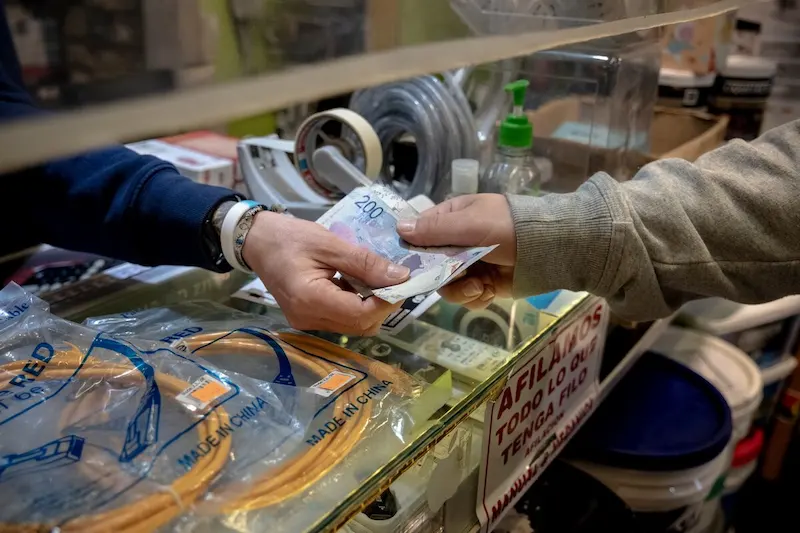


As the presidential election approaches in Argentina, several companies are halting sales out of fear of a major currency devaluation that could wipe out their revenue. From car parts to construction materials and even toilet paper, businesses of all sizes are holding their collective breath as conflicting statements from key aides to competing candidates create uncertainty about the future of the Argentine peso.
The latest prediction came from Carlos Melconian, economic adviser to opposition candidate Patricia Bullrich, who forecasted a devaluation that would see the official exchange rate plummet from 350 pesos to 500 pesos per dollar. The ruling coalition swiftly responded, asserting that there would be no devaluation next week or in the near future. However, leading presidential candidate Javier Milei openly advocates for the dollarization of the Argentine economy, urging citizens to stop saving in pesos.
The expectations of a peso plunge are particularly high because presidential candidate and Economy Minister Sergio Massa devalued the currency by 18% after Argentina's primary vote. Since then, Massa has frozen the official rate, fueling widespread speculation of another devaluation following the general election. In the parallel market, the peso has already surpassed 1,000 per dollar.
The looming uncertainty has led to companies freezing purchases as they await the election results. Juan Pablo Rudoni, the head of modular construction company EcoSan, has seen suppliers cancel orders despite previous confirmations with receipts. Similar is the case with auto shops, which received notices from suppliers stating that they cannot order new parts until after the election. Last week, General Motors even temporarily halted production in Argentina due to a lack of imported components. Suppliers of paper towels and toilet paper have also notified small businesses that sales will be suspended for the entire week after the election.
The effects are not limited to specific industries or regions. Gas stations in Jujuy province have reportedly suspended sales as customers try to stock up on fuel before a potential devaluation. In Patagonia's Neuquen province, computers and other electronics are no longer available, while grocers and supermarkets in the farming province of Chaco are warning that some suppliers will not sell until after the election.
According to an adviser to Bullrich, all these suspended activities are indicative of "incipient pre-hyperinflation behavior." Eduardo Levy-Yeyati criticized Massa and Milei, attributing the situation to the government's fiscal policies and the prophecy of dollarization. He expressed hope that the election results on Sunday would help calm the situation and provide some much-needed stability to the market.