




In a bid to diffuse mounting tensions, leaders of Serbia and Kosovo were urged to dial back hostilities during a high-level meeting with the leaders of Germany, France, and Italy. The meeting took place on the sidelines of a European Union summit in Brussels, with German Chancellor Olaf Scholz, French President Emmanuel Macron, and Italian Prime Minister Giorgia Meloni in attendance. The 40-minute exchange marked the most significant meeting between the Balkan rivals and these European leaders.
Serbian President Aleksandar Vucic and Kosovar Prime Minister Albin Kurti continued their talks mediated by the EU following the meeting. They were encouraged by Scholz, Macron, and Meloni to set aside their differences and work towards normalization as the primary path towards EU membership. This has been a crucial condition set by the EU for the accession of both Serbia and Kosovo, who both aspire to join the bloc.
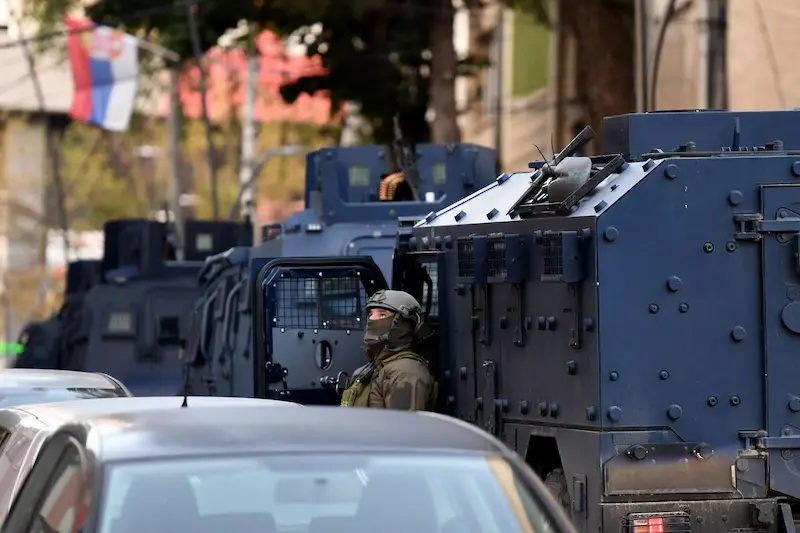
Achieving a breakthrough has proven challenging for EU and US diplomats, as they have grappled with formulating a plan that grants a degree of autonomy to Kosovo's ethnic Serbs, who make up the majority in the northern part of the country. The recent surge in tensions was triggered by a violent clash between Serb militants and Kosovo police in northern Kosovo, resulting in the deaths of four individuals, including a Kosovar police officer. This incident marked the worst violence in almost twenty years.
The root of the conflict lies in Kosovo's unilateral declaration of independence from Serbia in 2008, following a brutal offensive by Serbian forces that was halted by NATO airstrikes. Serbia has consistently refused to acknowledge Kosovo as an independent state, considering it the historical cradle of the Orthodox nation.
A crucial issue complicating diplomatic efforts is the situation of ethnic Serbs residing in Kosovo, who have received support from the government in Belgrade. Finding a resolution that addresses the concerns of both sides while preserving stability remains a challenging task.
The meeting between the EU leaders and the Serbian and Kosovar counterparts serves as a reminder of the importance of finding a peaceful way forward. Dialogue and reconciliation are essential in defusing tensions and ensuring stability in the Balkans. It is hoped that all parties involved will heed the strong message from the EU and make genuine efforts towards normalization, fostering an environment that paves the way for EU membership aspirations.